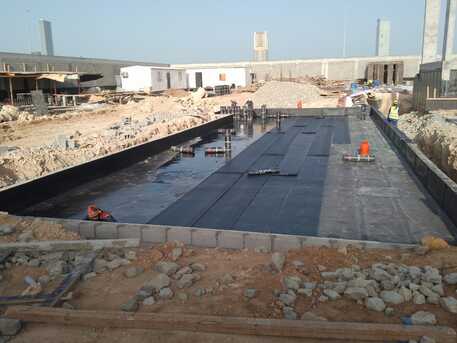
Structural Waterproofing: For basements, foundations, and retaining walls.
Roof Waterproofing: Application for flat and sloped roofs.
Bathroom and Kitchen Waterproofing: Focused on wet areas in residential and commercial spaces.
Swimming Pool Waterproofing: Ensuring no leakage in pools.
Water Tank Waterproofing: Preventing leaks in concrete and steel water tanks.
Balcony/Deck Waterproofing: Protection against rain and water stagnation.
Industrial Waterproofing: For plants, factories, and large-scale infrastructure.
2. Common Waterproofing Methods
Bituminous Membranes: Popular for roofs and foundations.
Polyurethane Waterproofing: Ideal for flat roofs and terraces.
Cementitious Waterproofing: Common for wet areas and easy to apply.
Liquid Waterproofing Membranes: Provides a seamless finish for roofs and walls.
EPDM Rubber Sheets: For industrial and large roof waterproofing.
Injection Grouting: For cracks and leakages in concrete structures.
3. Materials to Supply
Bitumen sheets and rolls.
Polyurethane-based waterproofing chemicals.
Liquid membrane products.
Cementitious waterproofing compounds.
Tools: Brushes, rollers, sealant guns, heat blowers.
4. Target Market
Construction companies (residential and commercial projects).
Property owners (houses, offices, etc.).
Industrial clients (factories, warehouses).
Swimming pool contractors.