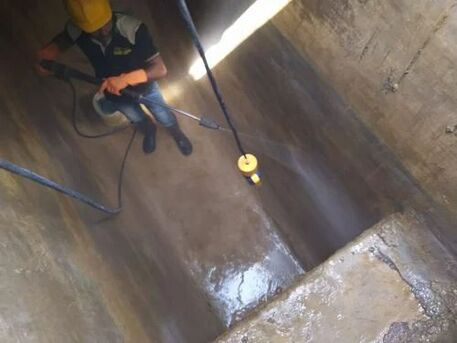
Here's a more detailed process:
1.?Drain the tank:
Completely empty the tank to allow for easy access and cleaning.?
2.?Remove debris:
Sweep or hose out any loose debris, sediment, or leaves from the bottom of the tank.?
3.?Scrub the interior:
Use a stiff brush and a cleaning solution (water mixed with a mild detergent or bleach solution,?according to Bega Concrete Tanks) to scrub the walls and floor, paying attention to areas with algae or mineral buildup.?
4.?Rinse thoroughly:
Rinse the tank multiple times with clean water to remove all traces of cleaning solution.?
5.?Disinfect:
Fill the tank with a disinfectant solution (e.g., a bleach solution mixed with water), following the manufacturer's instructions.?
6.?Rinse again:
After the recommended contact time (usually 24 hours for bleach solutions), drain and rinse the tank again to remove the disinfectant.?
7.?Refill and test:
Refill the tank with clean water and collect samples for bacteriological analysis to ensure the water is safe for use.?
Important Considerations:
Safety:
When using bleach or other strong chemicals, wear appropriate safety gear (gloves, eye protection) and ensure proper ventilation.?
Professional help:
If you are unsure about any step of the cleaning process or if the tank is very large or heavily contaminated, consider hiring professional tank cleaning services.?
Regular maintenance:
Clean your concrete water tank at least every six months or more frequently if needed, to maintain water quality and prevent issues.?