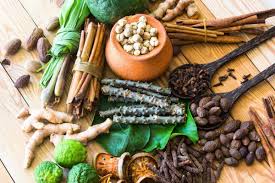
As someone who's always been fascinated by integrative health practices, I recently had the privilege of exploring VYDSAMCK. What struck me most wasn't just the sprawling campus or the aromatic herb gardens but the palpable sense of purpose: a commitment to producing not just doctors but guardians of holistic well-being.
The Roots: A Legacy Honoring Vaidya Yagya Dutt Sharma
To understand VYDSAMCK, we must start at its inception. Established in 1999 under the aegis of the Uttar Pradesh State Medical Faculty and affiliated with the Mahayogi Guru Gorakhnath AYUSH University, the college was founded by a visionary group of Ayurvedic practitioners dedicated to reviving the siddhis (perfected knowledge) of traditional healing in a post-colonial India. But the real heartbeat of the institution is its namesake: Vaidya Yagya Dutt Sharma, a legendary Ayurvedic scholar and practitioner whose life embodied the Charaka Samhita's ideals of ethical healing.
Born in the early 20th century in the rural heartlands of Uttar Pradesh, Sharma-ji (as he's affectionately remembered) was a prodigy who mastered the Ashtanga Hridaya and Sushruta Samhita by his teens. During India's freedom struggle, he treated wounded revolutionaries with herbal concoctions, earning the moniker "Yagya" for his sacrificial devotion. Post-independence, he established free clinics in Khurja, a town famed for its pottery but underserved in healthcare. His innovations—like adapting Panchakarma therapies for industrial workers exposed to silica dust from local kilns—highlighted Ayurveda's adaptability.
What sets VYDSAMCK apart from flashier urban institutions? It's grounded in desi (local) wisdom. Khurja's agrarian backdrop—dotted with mustard fields and sugarcane groves—provides a living laboratory for studying rasayana (rejuvenation) herbs like ashwagandha and brahmi, sourced directly from nearby farms. This isn't theoretical education; it's experiential, rooted in the soil of Sharma's legacy.
Campus Life: A Sanctuary of Serenity and Scholarship
Stepping onto the 10-acre campus feels like entering a vaastu shastra-aligned oasis. Designed with Ayurvedic principles in mind—east-facing entrances for positive prana flow and central courtyards for communal satsang—the layout promotes harmony. The main administrative block, a blend of red-brick colonial architecture and jaali (lattice) screens, houses the principal's office and library. Flanking it are lecture halls equipped with smart boards and AV systems, ensuring that shloka recitations from ancient texts can be paired with digital animations of dosha imbalances.
But the real stars? The Sharma Herbal Garden, sprawling across 2 acres and boasting over 300 species of medicinal plants. Here, students identify gunapadam (herbal properties) under the guidance of botanists, harvesting tulsi for anti-inflammatory studies or neem for dermatological trials. It's not just a garden; it's a biodiversity hotspot, certified by the National Medicinal Plants Board, where research on climate-resilient ojas-boosting herbs is underway.
Facilities-wise, VYDSAMCK punches above its weight. The 100-bed integrated hospital—an NABH-accredited gem—sees 300 outpatients daily, offering everything from abhyanga (oil massages) to shirodhara (oil stream therapy). The pharmacy dispenses bhasmas (herbal ashes) prepared in-house via puta (calcination) methods, ensuring authenticity. For students, there's a state-of-the-art anatomy lab with 3D models of marmas (vital points), a pathology wing for nadi pariksha (pulse diagnosis) training, and even a yoga pavilion overlooking the Ganga canal for pranayama sessions at dawn.
Hostel life is communal yet comfortable: separate wings for 200 boys and girls, with solar-powered rooms, high-speed Wi-Fi (crucial for accessing PubMed's Ayurvedic archives), and mess halls serving sattvic meals—think khichdi with ghee, avoiding tamasic garlic on exam days. Eco-initiatives abound: rainwater harvesting, zero-plastic policies, and a vermicomposting unit turning kitchen waste into fertilizer for the gardens. In a world of concrete jungles, VYDSAMCK reminds us that healing starts with harmony—with nature, self, and community.
Academic Excellence: From BAMS to Cutting-Edge Research
At its core, VYDSAMCK is an academic powerhouse, offering a suite of programs tailored to Ayurveda's eight branches (ashtanga). The flagship BAMS (5.5 years, including internship) curriculum follows the National Commission for Indian System of Medicine (NCISM) guidelines but infuses local flavor: modules on kshar sutra (caustic thread therapy) for Khurja's fissure-prone potters, or rasa shastra for heavy metal detox in polluted environs.
Postgraduate options shine brighter. The MD/MS in Ayurveda (3 years) covers specialties like kayachikitsa (internal medicine), shalya tantra (surgery), and panchakarma. Imagine dissecting a kshara karma procedure on cadavers while debating its efficacy against IBS in a seminar. PhD programs delve into ethnopharmacology, with theses like "Efficacy of Local Guduchi Variants in Post-COVID Ama Clearance"—timely, given Ayurveda's role in India's pandemic response.
What elevates the academics? A faculty of 50+ vaidyas, many with decades of guru-shishya lineage. Dr. Anjali Sharma, granddaughter of the founder, leads the dravyaguna (pharmacology) department, blending her Oxford fellowship in herbal genomics with classical nirgundi formulations. Guest lectures from luminaries like Vaidya Rajesh Kotecha (former AYUSH Secretary) keep things dynamic.
Research is no afterthought. The VYDS Research Center, funded by ICMR grants, has published 150+ papers in journals like the Journal of Ayurveda and Integrative Medicine. Recent breakthroughs include a triphala-based nanoparticle for diabetes management, tested in Phase II trials. Students contribute via in-service projects, earning stipends and patents. Admission? Merit-based via NEET-UG, with reservations for rural candidates—democratizing access to this ancient art.
Student Life: Forging Healers in the Fire of Discipline and Joy
Envision a typical day at VYDSAMCK: Dawn surya namaskar in the amphitheater, followed by padartha vigyan lectures on atomic theory in Ayurveda. Afternoons in the OPD, diagnosing vata disorders via darshan-sparshana (observation-touch). Evenings? Cultural sandhya with kathak performances or havana rituals invoking Dhanvantari, the divine physician.
But it's not all tapas