The Roots of Resilience: History and Vision of Prem Raghu
Every great institution has a story woven from passion, perseverance, and purpose. Prem Raghu Ayurvedic Medical College and Hospital traces its origins to the visionary Prem Raghu Dharmarth Chikitsa Sewa Samiti, founded on January 24, 2004. This charitable society, dedicated to charitable medical services, laid the groundwork for what would become a premier Ayurvedic powerhouse. The college itself was formally established in 2016, under the stewardship of Dr. P.P. Singh, the esteemed Chairman. Inspired by his father, the late Shri Shankar Lal Kushwaha—a philanthropist whose life embodied selfless service—and supported by his brother, Director Dr. R.K. Singh, Dr. P.P. Singh envisioned a space where ancient Ayurvedic texts like the Charaka Samhita and Sushruta Samhita could breathe new life through contemporary pedagogy.
The name "Prem Raghu" pays homage to Lord Rama's devoted brother, Lakshmana (also known as Raghu), symbolizing unwavering commitment to healing and humanity. From its inception, the college has been driven by a mission to bridge the gap between traditional knowledge and modern science. In Hathras, a district often overlooked in the shadow of nearby Agra and Aligarh, Prem Raghu emerged as a catalyst for local empowerment. The institution's ethos is encapsulated in its motto: "Sarve Bhavantu Sukhinah" (May all beings be happy and free from disease), drawing from the Upanishads to promote preventive healthcare over curative interventions.
Over the years, Prem Raghu has grown from a modest setup to a 60-bed hospital-integrated college, expanding its footprint with a 100-bed multi-specialty wing in the pipeline. This evolution reflects the founders' foresight amid India's AYUSH boom—government initiatives like the National AYUSH Mission have poured resources into such centers, but Prem Raghu's private initiative sets it apart. By 2025, it has become a trusted name, offering free tele-consultations and community camps, echoing the samiti's charitable roots. Challenges, like the oxygen shortages during the 2021 pandemic, tested its resilience, but the college's quick pivot to emergency tie-ups with nearby facilities underscored its adaptability. Today, with over two decades of associated healthcare legacy, Prem Raghu stands as a testament to how visionaries can transform rural healthcare landscapes.
A Sanctuary of Learning: Campus Life and State-of-the-Art Facilities
Nestled on Agra Road in Hathras (PIN 204101), Prem Raghu's campus spans acres of verdant greenery, evoking the serene ashrams of ancient gurus. Accessible via the Yamuna Expressway, it's a mere 30 minutes from Agra's Taj Mahal, blending urban convenience with rural tranquility. The architecture fuses Vedic aesthetics—think arched verandas and herbal gardens—with modern infrastructure, creating an environment conducive to deep study and rejuvenation.
At the core are world-class facilities tailored for Ayurvedic scholars. The library houses over 5,000 volumes, including rare manuscripts on Panchakarma and Rasashastra, alongside digital archives for global research. Laboratories for anatomy (Rachana Sharir) feature advanced cadaver dissection setups, while herbal gardens cultivate over 200 medicinal plants like Ashwagandha and Tulsi, serving as living classrooms. The college's 60-bed hospital doubles as a practical training ground, with eight specialized OPDs for Kayachikitsa, Shalya Tantra, and more.
Student accommodations are a highlight: separate hostels for boys and girls offer air-conditioned rooms, Wi-Fi, and mess facilities serving sattvic (pure) Ayurvedic meals—think millet-based khichdi and herbal teas—at nominal rates. A well-equipped gymnasium promotes yoga and pranayama, aligning with the Swasthavritta department's focus on holistic fitness. Sports fields for volleyball and kabaddi ensure balanced lifestyles, while an auditorium hosts seminars by luminaries like Vaidya Rajesh Kotecha, former Secretary of AYUSH.
Safety and sustainability are paramount: 24/7 CCTV, solar-powered lighting, and rainwater harvesting reflect eco-conscious values rooted in Ayurveda's harmony with nature. For emergencies, an on-campus first-aid center and tie-ups with Prem Raghu Hospital & Research Centre ensure seamless care. These amenities not only meet NCISM standards but exceed them, fostering a nurturing ecosystem where students thrive.
Forging Healers: Academic
(Programs and Curriculum Excellence Prem Raghu's academic heartbeat is its BAMS program—a rigorous 5.5-year odyssey (4.5 years of academics + 1-year internship) blending theory, practice, and ethics. With 60 seats annually, it's highly competitive, admitting via NEET UG scores followed by UP AYUSH Counselling. For 2025-26, eligibility requires 10+2 in PCB with 50% aggregate (40% for reserved categories) and a minimum age of 17.
The curriculum, aligned with NCISM guidelines, spans 13 departments, each a pillar of Ayurvedic profundity. Maulika Siddhanta introduces Sanskrit and foundational texts, igniting a passion for Ashtanga Ayurveda (eight branches). Rachana Sharir delves into human anatomy through marma points and doshic physiology, while Kriya Sharir explores vata-pitta-kapha dynamics via hands-on simulations. Rasa Shastra & Bhaisajya Kalpana teaches alchemical formulations, from Bhasmas to herbal decoctions, in state-of-the-art pharmacies.
Clinical departments shine: Kayachikitsa covers internal medicine with Panchakarma therapies like Virechana (purgation) for detoxification. Shalya Tantra equips students for Kshara Sutra (caustic thread) surgeries, a minimally invasive Ayurvedic innovation for fistulas. Shalakya Tantra addresses ENT and ophthalmology with Netra Tarpana (eye nourishment), and Kaumarbhritya focuses on pediatric rasayanas for child immunity.
This holistic curriculum doesn't just produce graduates; it forges vaidyas who can navigate India's diverse health challenges, from lifestyle diseases to rural epidemics.
Healing Hands: The Integrated Hospital's Role in Community Care
No Ayurvedic college is complete without a pulsating hospital, and Prem Raghu's 60-bed IPD is its lifeline. Expanding to 100 beds soon, it serves 500+ outpatients daily across eight OPDs, offering subsidized treatments rooted in classical texts yet adapted for today.
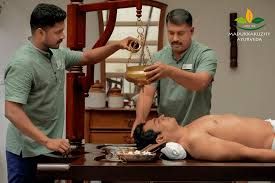
Specialties abound: Panchakarma suites deliver authentic therapies—Basti (enema) for arthritis and Nasya for sinusitis&m