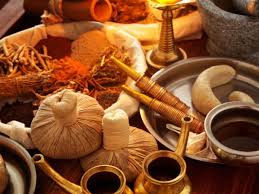
This blog post takes you on an in-depth journey through the college's history, academic offerings, state-of-the-art facilities, vibrant student life, and much more. Whether you're a prospective student eyeing the Bachelor of Ayurvedic Medicine and Surgery (BAMS) program, a healthcare enthusiast, or simply curious about Ayurveda's resurgence, read on to uncover why RK Ayurvedic Medical College & Hospital stands out in India's burgeoning Ayush landscape. With its affiliation to the prestigious Mahayogi Guru Gorakhnath AYUSH University, Gorakhpur, and approval from the National Commission for Indian System of Medicine (NCISM), the institution is not just a college—it's a sanctuary for future Vaidyas (Ayurvedic physicians).
The Roots of Resilience: History and Establishment
The story of RK Ayurvedic Medical College & Hospital is one of vision, dedication, and evolution. Founded in 2016 by the esteemed Dr. Prem Prakash Yadav, the institution began humbly as the "R.K. Ayurvedic Hospital." Dr. Yadav, a passionate advocate for indigenous medical systems, recognized the untapped potential of Ayurveda in rural India, where access to affordable, natural healthcare is paramount. Under the governance of the Society of Krishak Mahavidyalay Samiti—a non-profit body committed to educational and health initiatives—the hospital quickly became a vital resource for the local community in Azamgarh.
Azamgarh, a district rich in cultural heritage and agricultural bounty, provided the perfect backdrop. The society's ethos, centered on promoting health awareness through Ayurvedic principles, aligned seamlessly with the region's needs. Farmers grappling with lifestyle diseases and families seeking remedies for chronic ailments—these were the people Dr. Yadav aimed to serve. Within a few years, the demand for formal Ayurvedic education surged, prompting the management to upgrade the facility into a full-fledged medical college. Thus, in 2016, RK Ayurvedic Medical College & Hospital was born, with a mandate to blend ancient texts like the Charaka Samhita and Sushruta Samhita with modern pedagogical tools.
From its inception, the college has grown exponentially. Starting with a modest intake, it now boasts a 60-seat BAMS program, reflecting its commitment to quality over quantity. Over the past nine years, RK Ayurvedic has navigated challenges like the COVID-19 pandemic by ramping up telemedicine consultations and herbal formulations, proving its adaptability. Today, it stands as a testament to Dr. Yadav's foresight: a place where tradition meets innovation, serving over thousands of patients annually through its attached hospital.
A Sanctuary of Learning: Campus and Facilities
Step onto the sprawling campus of RK Ayurvedic Medical College & Hospital, and you're greeted by an aura of calm and greenery. Spanning several acres, the campus is designed with Vastu principles in mind—ensuring harmonious energy flow that enhances learning and healing. The architecture blends traditional elements like courtyards with jali screens for natural ventilation and modern structures equipped with solar panels for sustainability.
At the heart of the facilities is the hospital, a 100+-bed powerhouse with 14 specialized academic departments. These include Kayachikitsa (internal medicine), Shalya Tantra (surgery), Shalakya Tantra (ENT and ophthalmology), and Prasuti Tantra (obstetrics and gynecology), among others. Each department is staffed by qualified Vaidyas and features dedicated laboratories, museums stocked with anatomical models and herb specimens, and procedure rooms for hands-on training. The hospital's Outpatient Department (OPD) sees hundreds of patients daily, offering free or subsidized consultations in Panchakarma therapies, which detoxify the body through massages, steam baths, and herbal enemas. The In-Patient Department (IPD) caters to chronic conditions like diabetes, arthritis, and skin disorders, with success stories abounding—patients crediting their recovery to personalized Dosha-based treatments.
Academic infrastructure shines through the central library, a treasure trove of over 10,000 volumes on Ayurveda, including rare manuscripts and digital archives. Students have access to e-journals via the university portal, fostering research in areas like herbal pharmacology. The dissection hall and cadaver storage facility ensure ethical, high-standard anatomy training, while the herbal garden—a 2-acre haven—cultivates over 200 medicinal plants, from Ashwagandha to Tulsi. Here, students learn identification, cultivation, and sustainable harvesting, bridging theory with practice.
For holistic development, the college provides hostels for boys and girls, each with air-conditioned rooms, Wi-Fi, and biometric security. Mess facilities serve sattvic (pure) meals aligned with Ayurvedic diets, emphasizing seasonal, locally sourced ingredients. Sports grounds for yoga, kabaddi, and volleyball promote physical fitness, while an auditorium hosts guest lectures from luminaries like Dr. Vasant Lad. Anti-ragging cells and grievance redressal mechanisms ensure a safe, inclusive environment. A cafeteria, blood bank, and mini-pharmacy round out the amenities, making the campus a self-sufficient ecosystem.
Pathways to Proficiency: Academic Programs
RK Ayurvedic's flagship offering is the Bachelor of Ayurvedic Medicine and Surgery (BAMS), a rigorous 5.5-year program (4.5 years of academics plus a mandatory 1-year internship). Designed per NCISM guidelines, the curriculum delves into the eight branches of Ayurveda (Ashtanga Ayurveda), covering fundamentals like Padartha Vigyan (Ayurvedic philosophy), Dravyaguna (pharmacology), and Roga Nidan (diagnostics). What sets it apart is the integration of modern sciences—students study anatomy, physiology, and pathology alongside Sanskrit for authentic text interpretation.
The program emphasizes experiential learning: classroom lectures in air-conditioned halls give way to clinical rotations, where students diagnose patients using pulse examination (Nadi Pariksha) and prescribe formulations from the on-campus pharmacy. Electives in emerging fields like Ayurgenomics (Ayurveda-meets-genetics) prepare graduates for global opportunities. With a modest intake of 60 seats, class sizes remain intimate, allowing personalized mentorship.
While BAMS is the cornerstone, the college eyes expansion into postgraduate courses like MD/MS in Ayurveda, pending approvals. S