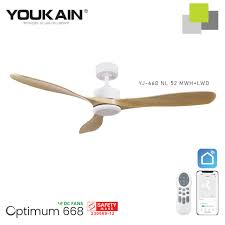
1. Choose the Right Size for the Room - Small fans typically range from 24 to 36 inches. To optimize airflow: 24–30 inches → Best for tiny rooms (study rooms, bathrooms, small kitchens). 32–36 inches → Suitable for slightly larger small rooms (bedrooms below 100 sq. ft.). If the fan is too small for the room, airflow will feel weak no matter what you do.
2. Install the Fan at the Correct Height - For strong airflow: Keep the fan 8–9 feet above the floor. Maintain 10–12 inches of clearance from the ceiling for the motor to breathe. If your ceiling is high, use a downrod. If your ceiling is low, choose a hugger/flush-mount small fan.
3. Position the Fan Centrally - The fan should be: In the center of the room for even airflow. At least 18 inches away from walls so blades can circulate air freely. For kitchen or corner setups, place it: Over the primary activity area (e.g., cooking space, desk, bed) instead of the exact center.
4. Use the Right Blade Angle and Material - Small fans with the right blade design will produce stronger air movement: Blade Pitch 12–15 degrees → Ideal for maximum airflow, ABS blades → Lightweight and efficient, Aerodynamic curved blades → Move more air while staying quiet.
5. Increase Fan Speed for Stronger Breeze - Small ceiling fans are designed to run at higher RPM: Use medium or high speed for best airflow. Low speed on small fans won’t cool much. Some high-performance compact fans reach 250–300+ RPM.
For long or oddly shaped rooms, using two small fans may outperform a single big one.
Address - 512 Chai Chee Lane #02-09 (469028)
Phone - 64456144, 97114676
Email - [email protected]
Visit - https://youkain.com.sg/prod ...