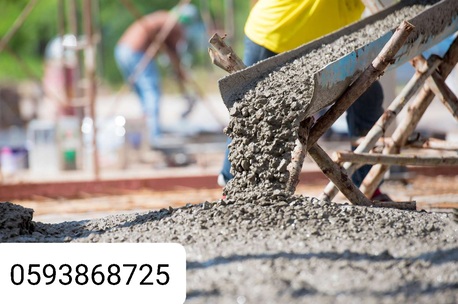
Composition and formation
Components: A mixture of a binder (typically Portland cement), aggregates (sand and gravel), and water.
Hardening process: The cement and water undergo a chemical reaction called hydration, forming a paste that binds the aggregates together and solidifies over time.
Curing: This hardening process is called curing and typically takes about 28 days to reach full strength.
Properties and uses
Strength: Concrete is exceptionally strong in compression but is brittle and weak in tension, which is why steel reinforcement is often added to create reinforced concrete for structures like bridges.
Versatility: It can be molded into a vast array of shapes and sizes, making it suitable for a wide range of structural and decorative applications.
Cost-effectiveness: Its affordability and durability make it a preferred material for many construction projects.
Other meanings of "concrete"
Adjective: It can also mean something that is real, actual, or based on facts, rather than being abstract or a theory (e.g., "concrete evidence").
Noun: It can refer to a mass formed by the coalescence of particles or, in perfumery, a waxy essence extracted from flowers.