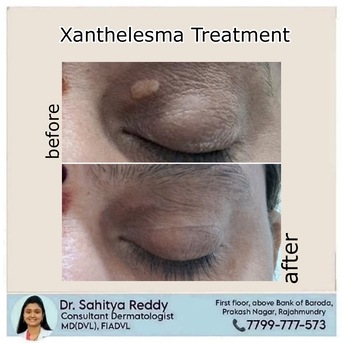
Xanthelasma can be treated through cosmetic procedures like surgical excision, laser therapy, chemical peels, or cryotherapy, but it's crucial to consult a doctor first, as these deposits can be a symptom of an underlying medical condition. Lifestyle changes such as a heart-healthy diet, exercise, and weight management can help control high cholesterol levels that cause them.
Cosmetic removal procedures
Surgical excision: The plaques are cut out, which is often the most effective method for larger deposits.
Laser therapy: A focused beam of light is used to vaporize or break down the cholesterol deposits with minimal damage to surrounding skin.
Chemical peels: A chemical agent, such as trichloroacetic acid (TCA), is applied to dissolve the lesions. This method may require multiple sessions.
Cryotherapy: Liquid nitrogen is used to freeze and remove the plaques, which then fall off.
Electrodessication: An electric current is used to dry out and remove the deposits.
Professional care is essential: Never attempt to remove xanthelasma yourself, as this can cause serious damage to the delicate skin around the eyes.
Book your appointment at 07799777573
Cosmetic removal procedures
Surgical excision: The plaques are cut out, which is often the most effective method for larger deposits.
Laser therapy: A focused beam of light is used to vaporize or break down the cholesterol deposits with minimal damage to surrounding skin.
Chemical peels: A chemical agent, such as trichloroacetic acid (TCA), is applied to dissolve the lesions. This method may require multiple sessions.
Cryotherapy: Liquid nitrogen is used to freeze and remove the plaques, which then fall off.
Electrodessication: An electric current is used to dry out and remove the deposits.
Professional care is essential: Never attempt to remove xanthelasma yourself, as this can cause serious damage to the delicate skin around the eyes.
Book your appointment at 07799777573