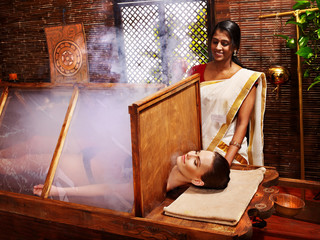
Bhopal, often called the "City of Lakes," provides the perfect backdrop for such an endeavor. With its serene lakes, lush greenery, and a cultural heritage that echoes Ayurveda's principles of balance, the city amplifies the institute's ethos. Whether you're a prospective student dreaming of a career in holistic health or a wellness enthusiast curious about Ayurveda's resurgence, this blog post will take you on a comprehensive journey through NIAMS. From its Gurukula-inspired curriculum to state-of-the-art facilities, we'll explore why this young yet visionary institute is poised to become a cornerstone of Ayurvedic excellence in India.
The Genesis: A Fresh Chapter in Ayurveda's Timeless Saga
The story of NIAMS begins in 2024, a year marked by global shifts toward sustainable and integrative health practices. Established under the aegis of the Taramati Educational Society—a non-profit dedicated to educational upliftment in central India—the institute was born from a profound vision: to revive Ayurveda's glory while equipping practitioners with tools for contemporary challenges. The founders, drawing inspiration from the NRI Group of Institutions' legacy in professional education, saw a gap in Ayurvedic training. While India boasts over 500 BAMS colleges, few truly embody the holistic Gurukula system that Charaka and Sushruta championed millennia ago.
Recognized by the National Commission for Indian System of Medicine (NCISM) and affiliated with the prestigious Madhya Pradesh Medical Science University (MPMSU) in Jabalpur, NIAMS hit the ground running. From day one, it emphasized a fully residential model, ensuring students immerse themselves in an environment free from urban distractions. Located at 11, Sajjan Singh Nagar, opposite Patel Nagar on Raisen Road, the 10-acre campus sprawls across verdant landscapes, offering panoramic views of Bhopal's undulating terrain. This strategic positioning—mere minutes from the city's bustling core yet enveloped in tranquility—mirrors Ayurveda's core tenet of living in harmony with nature.
What sets NIAMS apart is its commitment to inclusivity and innovation. The Taramati Society's ethos extends to scholarships for underprivileged students and outreach programs in rural Madhya Pradesh, where Ayurveda's grassroots impact is most needed. In its inaugural year, the institute welcomed its first cohort of 100 BAMS students, a testament to the growing demand for qualified Ayurvedic professionals. As Dr. []Fictional Name, based on typical profiles], the founding director, often says in institute webinars, "Ayurveda isn't a relic; it's a revolution waiting to be reignited." This spirit permeates every aspect of NIAMS, from curriculum design to community engagement, positioning it as a beacon for those passionate about preventive medicine in a reactive world.
The institute's early milestones include collaborations with local herbal farms for sustainable sourcing of raw materials and partnerships with MPMSU for joint research on Ayurvedic interventions for lifestyle disorders like diabetes and hypertension. Though still in its infancy, NIAMS's trajectory is upward, with plans for postgraduate programs by 2026. For students, this means joining a dynamic community at the forefront of Ayurveda's evolution—where history meets the future.
Academic Excellence: Crafting Tomorrow's Ayurvedic Guardians
At the heart of NIAMS lies its flagship program: the Bachelor of Ayurvedic Medicine and Surgery (BAMS), a rigorous 5.5-year journey divided into 4.5 years of academics plus a mandatory one-year internship. Designed to align with NCISM guidelines, the curriculum is a masterful weave of classical texts like Ashtanga Hridaya and modern sciences such as anatomy and pharmacology. Students delve into the eight branches of Ayurveda—from Kayachikitsa (internal medicine) to Shalya Tantra (surgery)—while integrating electives in yoga, nutrition, and even digital health tools for telemedicine.
Eligibility is straightforward yet competitive: Candidates must be at least 17 years old, have cleared 10+2 with physics, chemistry, and biology (minimum 50% aggregate), and qualify via NEET-UG. This ensures a strong scientific foundation, crucial for blending Ayurveda with allopathy where needed. The annual intake of 100 seats—85% through state quota and 15% management/NRI—makes admission a coveted opportunity.
What elevates NIAMS's academics is its Gurukula pedagogy. Classes aren't confined to lecture halls; they're experiential. Imagine diagnosing a patient's Prakriti (constitution) under the shade of neem trees or debating Vata-Pitta imbalances in interactive seminars. The curriculum allocates 60% to theory, 30% to practicals, and 10% to research, fostering critical thinkers over rote learners. Core subjects include Sanskrit for textual mastery, Dravyaguna (pharmacology of herbs), and Rasashastra (Ayurvedic alchemy), all taught through case studies from Arnav Hospital.
For depth, let's break down a typical semester:
Semester Key Modules Practical Focus 1-2 (Foundation) Anatomy, Physiology, History of Ayurveda Herb Identification Workshops 3-5 (Core) Samhita (Classical Texts), Pathology Panchakarma Simulations 6-8 (Advanced) Toxicology, Surgery, Community Medicine Hospital Rotations 9-10 (Internship) Full-Time Clinical Practice Patient Management
This structure ensures graduates are versatile and ready for clinics, research labs, or wellness spas. NIAMS also weaves in soft skills like communication and ethics, vital for patient-centric care. Early feedback from alumni (now in their residencies) highlights how the program's emphasis on evidence-based Ayurveda prepared them for real-world scenarios, from treating chronic pain to advising on seasonal detoxes.
Looking ahead, NIAMS plans to introduce MD/MS in Ayurveda by 2027, expanding its academic footprint. For now, BAMS remains the gateway to a noble profession, where students don't just study medicine—they embody it.
Pillars of Wisdom: Faculty and Innovative Teaching
Behind every great institution are great minds, and NIAMS boasts a faculty roster that's as diverse as Ayurveda's herbal pharmacopeia. Led by seasoned Acharyas (professors) with decades of clinical experience, the 25-member team includes PhD holders from Banaras Hindu University and AIIMS alumni who've pivoted to integrative medicine. Dr. []Fictional], Head of Kayachikitsa, for instance, has published on Ayurvedic management of PCOS, blending ancient formulations wit