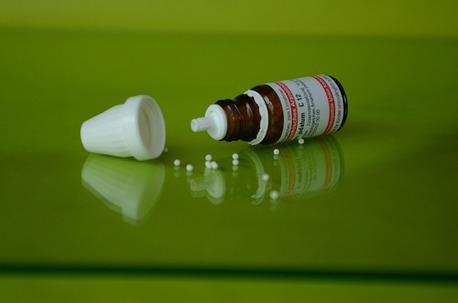
The Legacy of Homeopathy: Honoring Hahnemann's Timeless Vision
To understand HHMCH Bhopal, we must first pay homage to its namesake, Christian Friedrich Samuel Hahnemann (1755–1843), the German physician whose revolutionary ideas birthed homeopathy. Disillusioned with the harsh bloodletting and toxic purges of 18th-century medicine, Hahnemann experimented with quinine's effects on malaria, leading to his core tenet: a substance causing symptoms in a healthy person can cure similar symptoms in the sick when administered in minute doses. His seminal work, Organon of Medicine (1810), laid the groundwork for a system that's now practiced in over 80 countries, with India boasting the world's largest network of homeopathic practitioners—over 250,000 registered doctors.
In India, homeopathy's journey intertwined with the freedom struggle, championed by figures like Mahatma Gandhi, who called it "the last resort of the masses." Post-independence, the National Council of Homoeopathy (NCH) was established in 1973 to standardize education, culminating in the Bachelor of Homeopathic Medicine and Surgery (BHMS) degree. Today, with the National AYUSH Mission injecting billions into infrastructure, homeopathy addresses chronic ailments like allergies, dermatological issues, and lifestyle diseases—areas where allopathy often falls short. HHMCH Bhopal embodies this legacy, training students not just in remedies but in empathy-driven care. As Dr. M.S. Khan, Secretary of the Hahnemann Educational Society, aptly notes, "Homeopathy is about holistic harmony—body, mind, and spirit." This ethos permeates every lecture hall and clinic bed at the college.
A Storied Past: The Evolution of HHMCH Bhopal
Founded in 1965 amid India's post-colonial push for indigenous medicine, Hahnemann Homeopathic Medical College was envisioned as a self-financing beacon by the Hahnemann Educational Society, Bhopal. Starting humbly with a two-year Diploma in Homeopathic Medicine and Biochemistry (D.H.B.), recognized by the Madhya Pradesh State Council of Homoeopathy, it catered to a nascent demand for qualified homeopaths in rural heartlands. The college's early years were marked by grit: classes in modest rented spaces, faculty doubling as administrators, and a curriculum blending Hahnemann's Organon with basic biochemistry.
By 1982, buoyed by national reforms, it upgraded to a four-year Diploma in Homeopathic Medicine and Surgery (D.H.M.S.), earning nods from both the MP government and the NCH, New Delhi. This era saw the college relocate to its current sprawling campus at New Jail By-Pass Road, Karond, Bhopal—a verdant 10-acre haven that's grown into a modern edifice with eco-friendly architecture. The pivotal shift came in 2015, when, after rigorous approvals from the Ministry of AYUSH and affiliation with Madhya Pradesh Medical Science University (MPMSU), Jabalpur, HHMCH launched its flagship five-and-a-half-year BHMS program (including a one-year compulsory internship). This move aligned it with global standards, boosting intake from a handful to 100 seats annually.
Over six decades, HHMCH has weathered challenges—from funding crunches in the 1970s to the COVID-19 pivot in 2020, when its hospital became a frontline ally in telehomeopathy consultations. Today, it stands as Madhya Pradesh's oldest homeopathic college, a testament to resilience. "Since its inception, the institution has made steady all-round progress," proclaims its official chronicle, underscoring a trajectory from diploma mill to degree powerhouse.
Academic Excellence: Programs That Shape Healers
At HHMCH's core is its BHMS program, a rigorous 5.5-year odyssey divided into four professional years plus internship. The curriculum, mandated by the National Commission for Homoeopathy (NCH), weaves anatomy, physiology, pathology, and materia medica with homeopathic repertory and case-taking skills. First-year students dive into foundational sciences, mastering subjects like biochemistry via hands-on dissections in air-conditioned labs. By the third year, it's all about clinical integration—prescribing remedies for simulated ailments using software like RadarOpus.
Eligibility is straightforward: 10+2 with 50% aggregate in Physics, Chemistry, and Biology (40% for reserved categories), plus a minimum NEET UG score (40th percentile for general, lower for others). Admissions unfold via the Directorate of the Indian System of Medicine and Homoeopathy, MP's centralized counseling.
Beyond BHMS, HHMCH fosters postgraduate aspirations through MD (Homoeopathy) guidance, though it primarily focuses on UG. Electives in yoga and naturopathy add interdisciplinary flair, preparing students for AYUSH's integrative models. Guest lectures from AIIMS Delhi experts and workshops on AI-driven remedy selection keep the pedagogy dynamic. With a 1:10 faculty-student ratio, personalized mentoring ensures no query goes unanswered—vital in a field where nuance trumps rote learning.
Infrastructure and Facilities: A Campus Built for Healing
Step onto HHMCH's campus, and you're greeted by a symphony of sustainability: solar panels glinting atop lecture halls, herb gardens bursting with arnica and belladonna, and pathways lined with neem trees symbolizing homeopathy's natural ethos. The 100,000 sq. ft. academic block houses 20+ air-conditioned classrooms with projectors, while six specialty labs (e.g., forensic medicine with mannequins for poisoning simulations) equip students for real-world diagnostics.
The crown jewel? The central library, a 10,000-volume sanctuary stocking Hahnemann's originals alongside Kent's Repertory and digital journals via DELNET. Departmental libraries in gynecology and pediatrics offer niche tomes, fostering late-night epiphanies. Hostels—separate for 200 boys and girls—boast en-suite bathrooms, Wi-Fi, and mess halls serving sattvic meals (think millet khichdi with herbal infusions).
Sports facilities include a multipurpose ground for cricket and kabaddi, plus a gym with yoga mats—essential for students combating sedentary study marath