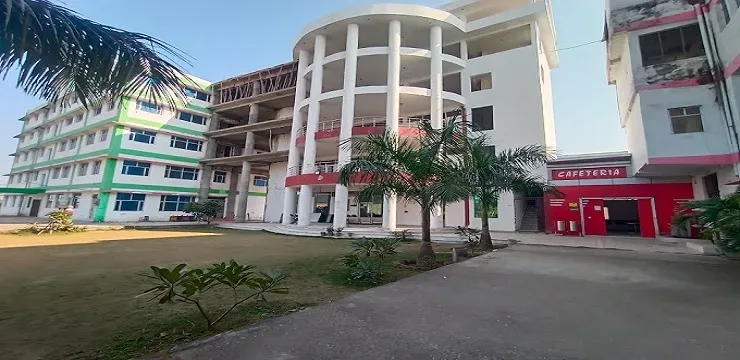
Historical Roots and Recognition
Haridwar Ayurvedic Medical College and Hospital—formally known as Haridwar Ayurveda Medical College & Research Centre (HAMCRC)—is an Ayurveda-focused medical institution located in Haridwar, Uttarakhand. The college operates under the aegis of the Hasnu Ahmad Memorable & Charitable Society and is recognized by the NCISM and affiliated with Uttarakhand Ayurved University, Dehradun. This recognition ensures that the college adheres to internationally accepted standards of Ayurvedic education and practice and that its graduates are qualified to practice and contribute to the world of Ayurvedic medicine.
Though specific founding year details vary across sources, established information shows that the institution has matured into a full-fledged center for Ayurvedic education and clinical services, blending classical Ayurvedic principles with insights informed by modern science.
Academic Offerings and Curriculum
The flagship program at Haridwar Ayurvedic Medical College is the Bachelor of Ayurvedic Medicine and Surgery (BAMS) degree—a comprehensive, multi-year professional program designed to prepare students for a life devoted to traditional medicine and patient care.
BAMS Course Structure
The BAMS curriculum at HAMCRC is structured around:
Classical Ayurvedic knowledge: covering foundational texts, philosophical underpinnings, and the holistic worldview of health and disease.
Modern clinical sciences: including subjects like physiology, pharmacology, pathology, anatomy, and preventive & social medicine, which help bridge traditional frameworks with contemporary medical understanding.
Practical clinical exposure: through supervised training in hospital wards and therapeutic departments where students observe and administer treatments under expert supervision.
This combination ensures that graduates not only understand ancient texts but can also apply their knowledge meaningfully in real-world clinical contexts.
The institute also explores research pathways in areas such as Unani medicine and various Ayurvedic specializations—an important step toward integrating evidence-based research with traditional healing modalities.
Admissions to the BAMS program are competitive, with seats often allocated through state-level AYUSH entrance exams as well as central counselling processes, ensuring that meritorious candidates across India have an opportunity to pursue Ayurvedic education.
Infrastructure and Campus Life
The physical campus of Haridwar Ayurvedic Medical College offers a blend of academic facilities, clinical infrastructure, and supportive amenities, tailored to promote learning, health, and student well-being.
Academic and Teaching Facilities
Classrooms & Lecture Halls: Adequate spaces with modern teaching aids help facilitate dynamic learning.
Laboratories: Equipped with facilities for biochemistry, hematology, and Ayurvedic treatment modalities that enable hands-on learning.
Library: A dedicated collection of Ayurvedic and related medical literature supports research and self-directed study.
Computer-based Learning: IT infrastructure supports access to digital resources, research, and academic tools.
Clinical Services and Hospital Departments
The associated hospital plays an essential role in student training and community healthcare:
Ayurvedic treatment units focus on Kaya Chikitsa (internal medicine), Panchakarma therapies (detoxification and rejuvenation), and other traditional specialties.
OPD and IPD services provide students with real patient interaction, exposure to a variety of health conditions, and practical experience in Ayurvedic diagnosis and treatment.
Supportive Student Amenities
Sports and gym facilities to promote physical health.
Auditorium and Event Spaces for seminars, cultural activities, and academic discourse.
Cafeteria and guest rooms for students and visiting scholars.
Health Center for first aid and immediate care, reflecting a nurturing campus environment.
Community Impact and Healthcare Services
At its core, Haridwar Ayurvedic Medical College and Hospital plays a dual role—as an educational institution and a community health hub. Its associated hospital treats patients from Haridwar and surrounding districts, offering Ayurvedic care that often complements conventional medical approaches.
Given Haridwar’s position as both a pilgrimage site and a densely populated urban region, the hospital’s services reach a diverse cross-section of society—from local residents seeking preventive healing to chronic disease patients opting for Ayurvedic therapies. This exposure enriches students’ training and ensures that the college contributes meaningfully to regional healthcare.
In addition, the institution’s focus on outreach and awareness programs—including health camps and public education on wellness practices such as yoga and Panchakarma—reinforces Ayurveda’s relevance to modern lifestyles.
Faculty and Ethical Practice
A pivotal asset of Haridwar Ayurvedic Medical College is its faculty—comprised of clinicians, educators, and practitioners with deep knowledge of Ayurvedic theory and clinical practice. Their dedication to holistic healing, rigorous scholarship, and cultural preservation shapes the student experience and ensures that graduates are not merely degree holders but responsible healers.
The college’s emphasis on ethical practice, scientific temper, and research-oriented inquiry prepares students to contribute to Ayurveda’s evolution at both national and global levels.
*Thanks and Regards*
📞 For Counselling and admission Guidance:
☎️ []7OO733313O - 7O81O2O3O4]