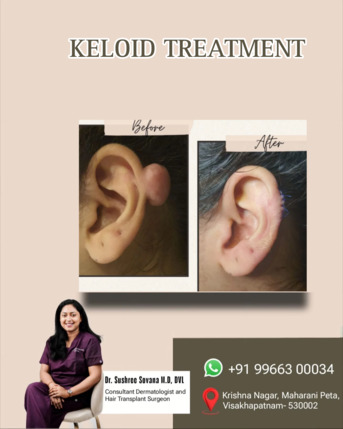
Keloids are raised, overgrown scars from excess collagen after skin injury (acne, piercings, surgery, burns), common in darker skin & genetic predispositions, causing itchiness or pain. Treatments include corticosteroid injections, laser therapy, cryotherapy, surgical removal (often with radiation to prevent recurrence), pressure dressings, silicone sheets, and sometimes topical treatments like onion extract, aiming to flatten and reduce them, though recurrence is common.
Causes & Risk Factors
Skin Injury: Any trauma, from acne/piercings to surgery/burns, can trigger overproduction of collagen during healing.
Genetics: A family history increases risk, suggesting inherited tendency.
Skin Type: More common in people with brown or Black skin.
Age: More frequent in those under 30.
Location: Common on chest, shoulders, earlobes, cheeks, but can occur anywhere.
Treatment Options
Injections: Corticosteroid injections flatten scars (may need months).
Laser Therapy: Pulsed-dye lasers can flatten larger keloids and ease itching.
Cryotherapy: Freezing small keloids with liquid nitrogen.
Surgical Excision: Often combined with radiation or other therapies to lower high recurrence risk.
Pressure Therapy: Garments or dressings applied to the wound.
Silicone Gel/Sheets: Help flatten and soften scars.
Topical Treatments: Onion extract, imiquimod cream, or other gels may be used.
Combination Therapy: Excisions with post-surgery radiation are highly effective.
For more information contact us at 09966300034
Causes & Risk Factors
Skin Injury: Any trauma, from acne/piercings to surgery/burns, can trigger overproduction of collagen during healing.
Genetics: A family history increases risk, suggesting inherited tendency.
Skin Type: More common in people with brown or Black skin.
Age: More frequent in those under 30.
Location: Common on chest, shoulders, earlobes, cheeks, but can occur anywhere.
Treatment Options
Injections: Corticosteroid injections flatten scars (may need months).
Laser Therapy: Pulsed-dye lasers can flatten larger keloids and ease itching.
Cryotherapy: Freezing small keloids with liquid nitrogen.
Surgical Excision: Often combined with radiation or other therapies to lower high recurrence risk.
Pressure Therapy: Garments or dressings applied to the wound.
Silicone Gel/Sheets: Help flatten and soften scars.
Topical Treatments: Onion extract, imiquimod cream, or other gels may be used.
Combination Therapy: Excisions with post-surgery radiation are highly effective.
For more information contact us at 09966300034