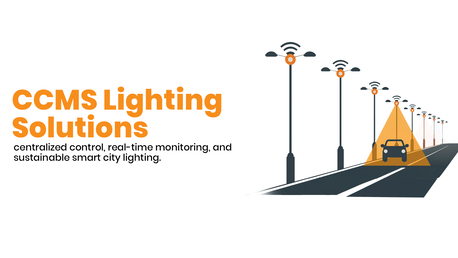
Understanding CCMS Street Lighting Management System
A CCMS street lighting management system allows authorities to remotely control, monitor, and analyze streetlight performance.
Smart Controllers: Enable remote switching, dimming, and monitoring of individual streetlights efficiently.
Communication Modules: Transfer real-time lighting data using GPRS, RF, or NB-IoT networks.
CCMS Software Platform: Central dashboard for monitoring, controlling, and analyzing lighting infrastructure remotely.
Energy Meters and Sensors: Measure power consumption and detect faults without manual field inspection.
Implementation Process Explained
Site Survey and Planning
A structured survey ensures successful CCMS deployment.
Site Assessment: Evaluate pole condition, wiring layout, load capacity, and lighting requirements accurately.
Hardware Deployment
Controllers and meters are installed within streetlight panels.
Hardware Installation: Install controllers, meters, and communication devices inside streetlight control panels.
Most devices operate on 220–240V AC, support 6A–16A loads, and are designed for outdoor environments.
Software Integration
System integration connects physical devices with the CCMS dashboard.
Software Integration: Connect all field devices to CCMS platform for centralized monitoring operations.
Testing and Optimization
System performance is validated before full-scale rollout.
Testing and Optimization: Verify automation schedules, dimming accuracy, and fault alerts thoroughly.
Benefits of Smart Street Lighting Solutions
Energy Savings: Reduce electricity consumption through intelligent scheduling and adaptive dimming control.
Remote Monitoring: Monitor lighting status and faults without visiting physical locations.
Lower Maintenance Costs: Minimize manpower, repair delays, and operational expenses significantly.
Improved Public Safety: Ensure consistent illumination across roads, walkways, and public spaces.
Application Areas
Smart Cities: Enable centralized lighting control supporting intelligent urban infrastructure development.
Highways and Roads: Improve visibility while reducing energy waste across long road networks.
Industrial Parks: Ensure reliable lighting operations across large industrial and logistics facilities.
Residential Townships: Provide safe, automated lighting for internal roads and common areas.
Visit: https://octiot.com/ccms-lig ...