Skill-based education focuses on teaching learners how to perform tasks, solve problems, and handle tools or technology used in real working environments. This approach bridges the gap between academic knowledge and practical application, making learners more confident and job-ready.
Understanding Practical and Vocational Education
Practical education emphasizes learning by doing. Instead of focusing only on lectures and exams, students actively participate in training sessions that involve real equipment, real scenarios, and real problem-solving experiences. Vocational education, on the other hand, is designed to prepare learners for specific trades or technical roles by developing industry-relevant skills.
Together, practical and vocational education help learners build competence in their chosen field. This type of learning is especially beneficial for students who prefer hands-on experience and want to enter the workforce quickly with employable skills.
Hands-On Training and Real-World Exposure
One of the strongest advantages of skill-based education is hands-on training. Learners gain direct experience by working with tools, devices, and systems that are commonly used in real workplaces. This method allows students to understand not just how something works, but also why it works and how to fix issues when they arise.
Hands-on training improves problem-solving ability and builds confidence. When learners practice tasks repeatedly in a controlled environment, they become more comfortable handling real-life challenges. This experience plays a major role in reducing the learning curve when entering a job or starting independent work.
Technical Skill Development and Industry Relevance
Modern industries are driven by technology, making technical skills highly valuable. Skill-based education programs are often designed around current industry requirements, ensuring that learners stay relevant in a competitive job market. Training that aligns with industry standards helps learners adapt to changing technologies and tools.
Technical skills such as troubleshooting, repair, system analysis, and operational knowledge are increasingly important across many sectors. These skills enable individuals to find employment, improve productivity, and explore self-employment opportunities.
Learning Through Mobile and Electronics Repair Training
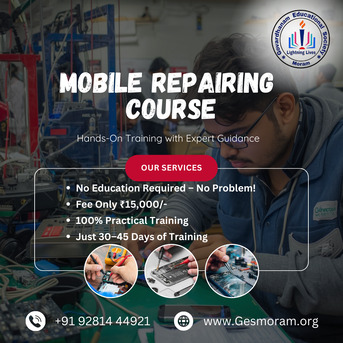
One of the most common examples of vocational training is mobile and electronics repair education. With the widespread use of smartphones and electronic devices, there is a constant demand for skilled technicians who can diagnose and repair issues efficiently.
Through practical training, learners understand hardware components, software functionality, and common technical problems. This hands-on exposure allows them to work independently and confidently. Such training also helps learners develop attention to detail, patience, and analytical thinking—skills that are useful across many technical fields.
Creating Employment and Self-Reliance
A key goal of skill-based education is to promote employment and self-reliance. By acquiring practical skills, learners increase their chances of securing jobs in technical roles. At the same time, vocational training opens doors to self-employment and entrepreneurship.
Individuals with technical expertise can start small service-based businesses, offer freelance services, or work as independent technicians. This ability to generate income independently plays a vital role in financial stability and long-term career growth. Skill development not only supports individuals but also contributes to economic development by creating a skilled workforce.
Confidence Building Through Practical Learning
Practical education helps learners overcome fear and uncertainty. When individuals work directly with tools and equipment, they develop confidence in their abilities. This confidence is essential when handling customer interactions, workplace responsibilities, or independent projects.
Supportive learning environments further enhance this experience. Step-by-step guidance, practice-based assessments, and continuous feedback help learners progress at their own pace. This approach ensures that even beginners can develop strong foundational skills without feeling overwhelmed.
Accessibility and Inclusivity in Skill Education
Skill-based education is particularly valuable because it is accessible to learners from diverse educational and economic backgrounds. Vocational training programs often focus on affordability and practical outcomes, making education more inclusive.
This accessibility allows students, job seekers, and career changers to improve their skills without long academic commitments. It also provides opportunities for individuals who may not have access to traditional higher education pathways.
Preparing for the Future Workforce
As industries continue to evolve, the demand for skilled professionals will only increase. Automation, digital tools, and new technologies require workers who can adapt quickly and learn continuously. Skill-based education prepares learners for this future by emphasizing adaptability, practical knowledge, and lifelong learning.
By combining theoretical understanding with hands-on practice, learners become more resilient and capable of handling industry changes. This balanced approach ensures long-term employability and professional growth.
Conclusion
Skill-based and vocational education has become an essential part of modern learning. By focusing on practical training, real-world exposure, and industry-relevant skills, this educational approach helps individuals build meaningful careers and achieve self-reliance. Hands-on learning not only improves technical ability but also builds confidence, problem-solving skills, and adaptability.
In a world where skills matter as much as knowledge, practical education stands as a powerful tool for personal and professional development. It transforms learning into action and knowledge into opportunity.