ISO 14001 Certification in Malaysia helps organizations establish a structured Environmental Management System that enables them to manage environmental risks, comply with regulations, and improve sustainability performance. As environmental responsibility becomes a priority across industries in Malaysia, organizations are increasingly expected to demonstrate control over their environmental impact while maintaining efficient and responsible operations.
ISO 14001 provides a practical framework for identifying environmental aspects, reducing negative impacts, and embedding environmental awareness into everyday business activities.
Understanding ISO 14001 Certification
ISO 14001 Certification confirms that an organization has implemented an Environmental Management System aligned with international environmental management standards. The standard focuses on how organizations identify environmental impacts, manage risks, comply with legal obligations, and pursue continual environmental improvement.
Rather than prescribing specific environmental performance targets, ISO 14001 requires organizations to define their own objectives based on their activities, risks, and regulatory environment, making the standard applicable to organizations of all sizes and sectors.
Importance of ISO 14001 for Malaysian Organizations
Malaysia’s regulatory landscape and growing focus on environmental protection require organizations to manage waste, emissions, energy usage, and resource consumption responsibly. ISO 14001 helps organizations meet environmental compliance obligations while reducing the risk of environmental incidents, penalties, and reputational damage.
For organizations involved in manufacturing, construction, logistics, energy, and export-oriented activities, ISO 14001 Certification strengthens credibility with customers, regulators, and international partners who increasingly expect environmentally responsible operations.
Core Components of ISO 14001 Implementation
An ISO 14001 Environmental Management System begins with identifying environmental aspects and impacts associated with organizational activities, products, and services. Organizations then evaluate risks and opportunities, define environmental objectives, and establish controls to manage significant impacts.
The standard emphasizes compliance with environmental laws, emergency preparedness, operational controls, monitoring of environmental performance, and continual improvement. Employee awareness and involvement are also critical, ensuring environmental responsibilities are understood across all levels of the organization.
Organizations That Benefit from ISO 14001 Certification in Malaysia
ISO 14001 Certification is applicable across diverse industries in Malaysia, including manufacturing, construction, infrastructure, oil and gas services, logistics, healthcare, hospitality, food processing, and professional services.
Both small and large organizations benefit from improved environmental governance, reduced waste, better resource efficiency, and stronger alignment with sustainability goals.
Business Benefits of ISO 14001 Certification
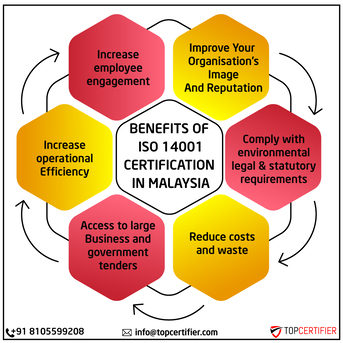
Organizations certified to ISO 14001 experience improved environmental performance, reduced environmental risks, and enhanced compliance management. The certification supports cost savings through better resource utilization, energy efficiency, and waste reduction.
ISO 14001 also improves organizational reputation by demonstrating a commitment to environmental responsibility. It supports sustainable decision-making and helps organizations respond proactively to environmental challenges and stakeholder expectations.
ISO 14001 Certification Process in Malaysia
The certification process typically begins with an assessment of current environmental practices against ISO 14001 requirements. This is followed by EMS design, documentation, implementation, internal audits, and management review. Once the system is mature, an independent certification audit is conducted to verify compliance.
After certification, organizations are required to maintain and continually improve their Environmental Management System through monitoring, audits, and performance reviews.
Conclusion
ISO 14001 Certification in Malaysia provides organizations with a structured approach to managing environmental responsibilities while supporting operational efficiency and regulatory compliance. By integrating environmental management into daily operations, organizations can reduce risks, enhance sustainability performance, and strengthen long-term business resilience.
For Malaysian organizations seeking to demonstrate environmental accountability and build sustainable operations, ISO 14001 offers a globally recognized and practical framework for continuous environmental improvement.