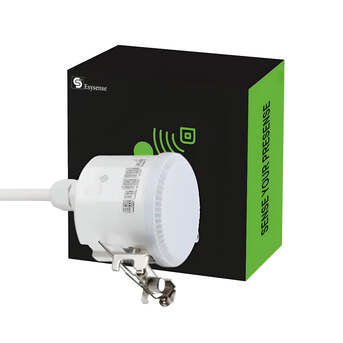
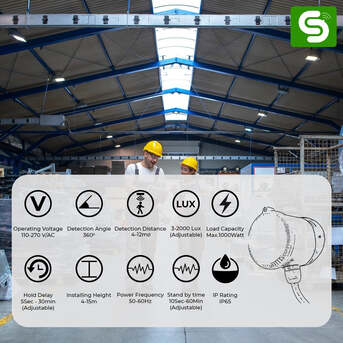
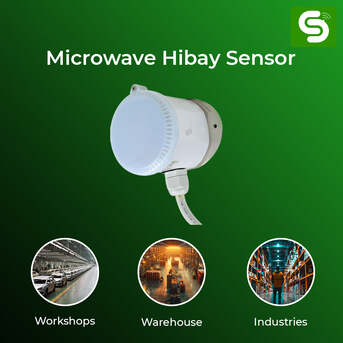
A microwave highbay motion sensor is a lighting control device designed for industrial facilities, warehouses, and high-ceiling commercial spaces. Using Doppler radar technology, it detects motion in large areas and automatically switches highbay lights ON or OFF.
In 2026, these sensors are considered top-tier solutions for energy-efficient and automated industrial lighting.
Key Benefits of Microwave Highbay Motion Sensors
Automatic Lighting Control : Automatically switches lights ON when motion is detected and OFF when areas are empty.
Explanation:
Prevents unnecessary energy usage in large warehouses and industrial spaces, where lighting can otherwise consume significant electricity.
Wide Detection Range : Highbay sensors cover large areas, often with 360? horizontal coverage, ensuring all zones, including aisles and workstations, are illuminated when needed.
Explanation:
Reduces the number of sensors required for full coverage and ensures consistent lighting for safety and efficiency.
Detects Small Movements : Sensitive enough to detect minor movements like walking or equipment operation.
Explanation:
Ensures lights activate even with minimal activity, maintaining visibility and workplace safety.
Energy Efficiency : Lights operate only when required, significantly reducing energy consumption in industrial and commercial spaces.
Explanation:
Highbay LED lights typically consume 100–400W per fixture; automation via motion sensors saves thousands of kWh annually.
Extended Fixture Lifespan : Controlled ON/OFF cycles prevent excessive operation, extending LED and highbay fixture life.
Explanation:
Reduces maintenance and replacement costs, increasing the ROI on industrial lighting systems.
Recommended Applications
Warehouses :
Automatically illuminates storage aisles and racks when workers are present.
Reduces energy usage in low-traffic zones.
Industrial Production Areas :
Detects operator movement for automatic lighting during work shifts.
Ensures safety and continuous operations.
Commercial High-Ceiling Spaces :
Large showrooms, exhibition halls, and storage facilities benefit from motion-activated highbay lighting.
Loading Docks & Parking Areas :
Automatically provides illumination for safe movement of personnel and vehicles.
Reduces energy consumption during off-peak hours.
Visit us : https://esysense.com/produc ...
Technical Features of Microwave Highbay Motion Sensors
Doppler Microwave Radar Detection : Detects motion through thin walls, glass, or shelving, ensuring reliable operation in complex industrial environments.
Explanation:
Unlike PIR sensors, microwave detection works even when line-of-sight is blocked, ideal for warehouses with tall racks.
360? Coverage : Provides full-area detection, minimizing blind spots and reducing the number of sensors required.
Adjustable Sensitivity & Delay : Customizable sensitivity for small or large movement, and delay settings for how long lights stay ON after motion stops.
Explanation:
Optimizes energy efficiency and ensures lights remain on long enough for safe passage.
LED & Highbay Compatibility : Supports LED, fluorescent, or HID highbay lights, allowing smooth operation without flicker or voltage issues.
Durable Construction : IP-rated housings protect against dust, temperature variations, and other industrial environmental factors.
Installation Tips
Mount sensors at the recommended highbay height (typically 12–18 ft) for optimal coverage.
Avoid mounting near large metallic structures that may interfere with microwave signals.
Test detection zones before final installation to ensure full coverage.
Adjust sensitivity and delay based on traffic levels in aisles and work areas.
Common Mistakes to Avoid
Setting sensitivity too low, missing small movements
Ignoring interference from machinery or metallic objects
Installing at incorrect heights, reducing coverage
Using sensors incompatible with the fixture wattage
Proper placement ensures maximum efficiency and energy savings.
Why Microwave Highbay Motion Sensors Are Essential in 2026
With industrial facilities prioritizing energy efficiency, automation, and safety, microwave highbay sensors deliver:
Hands-free, automatic lighting
Energy savings in large facilities
Enhanced safety for personnel and equipment
Extended lifespan for highbay fixtures
They are the optimal choice for modern warehouses and industrial environments in 2026.
Final Conclusion
Microwave highbay motion sensors for warehouses and industrial spaces provide automation, energy efficiency, wide coverage, and safety. Proper selection, installation, and configuration ensure reliable operation, cost savings, and long-term lighting performance in 2026.