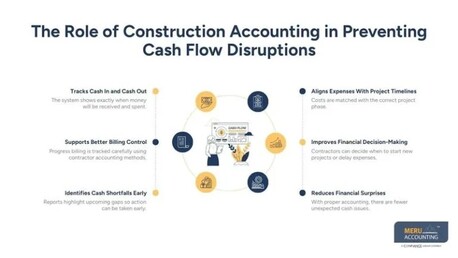
Unlike regular accounting, construction accounting tracks income and costs by project. It helps contractors plan cash better, avoid shortfalls, and stay financially prepared between jobs.
Why Cash Flow Gaps Happen in Construction
Cash flow gaps are common in construction because:
• Client payments are delayed
• Retention money is held until project completion
• Costs are paid before invoices are collected
• Projects don’t always overlap smoothly
• Expenses continue even when work slows
Without proper accounting, these gaps can grow quietly and cause serious stress.
How Construction Accounting Helps Maintain Steady Cash Flow
Construction accounting gives contractors clear visibility into their finances by:
• Tracking money coming in and going out
• Matching expenses to the right project
• Planning billing based on work completed
• Identifying cash shortages early
• Helping decide when to start new projects
This planning helps businesses avoid running out of cash between projects.
The Importance of Project-Based Tracking
Each construction project has its own budget, timeline, and payment schedule. Construction accounting:
• Tracks costs by project and stage
• Helps control labor and material spending
• Supports better payment planning
• Makes transitions between projects smoother
This project-level view is key to managing cash flow.
How Billing and Retention Affect Cash Flow
Construction accounting helps manage:
• Progress billing so invoices are sent on time
• Retention amounts so held payments aren’t forgotten
• Outstanding receivables to spot late payments quickly
Proper billing keeps money moving and reduces payment delays.
Managing Overhead Costs Between Projects
Even when projects pause, overhead costs continue. Construction accounting helps:
• Plan rent, insurance, and office expenses
• Track equipment and admin costs
• Spread overhead fairly across projects
• Maintain cash reserves
This prevents fixed costs from draining cash during slow periods.
Why Work-in-Progress (WIP) Reports Matter
WIP reports show:
• Work completed
• Amounts billed
• Costs incurred
• Remaining revenue
These reports help contractors avoid underbilling and plan cash flow accurately.
Common Mistakes Without Construction Accounting
Without proper systems, contractors often:
• Overestimate available cash
• Ignore retention impact
• Delay billing
• Track expenses too broadly
• Get reports too late
Construction accounting helps avoid these mistakes.
How Meru Accounting Supports Construction Cash Flow
Meru Accounting helps construction businesses stay financially stable by:
• Tracking job costs clearly
• Managing progress billing and retention
• Forecasting future cash needs
• Preparing WIP reports
• Allocating overhead correctly
• Providing clear, timely financial reports
This gives contractors confidence and control over cash between projects.
Key Takeaways
• Construction accounting helps avoid cash flow gaps
• Project-based tracking improves financial control
• Proper billing and WIP reports support steady cash flow
• Professional accounting support improves long-term stability
Strong construction accounting keeps projects moving—and cash flowing—even between jobs.
FOR MORE INFO: https://www.meruaccounting. ...