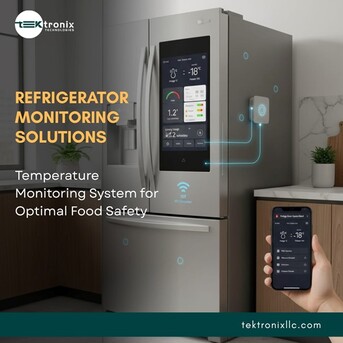
Due to digital transformation of global industries, Refrigerator Temperature Monitoring, Freezer Temperature Monitoring, and Wireless Temperature Monitoring have become a necessary instrument of reliability, traceability, and peace of mind.
The Need for Smart Temperature Monitoring in Modern Industries
In some of the countries such as Oman, Saudi Arabia and the UAE, where temperatures and humidity may pose a challenge to the storage conditions, it is important to keep the refrigeration at the correct level. Any deviation, even by a few degrees can result to spoilage, non-compliance and loss of money.
This is why facilities are migrating towards automated, sensor-based systems that are used to offer real-time monitoring, data logging and instant alerts that are used to ensure that goods that are temperature sensitive are safe and in compliance 24/7.
What Is Smart Refrigerator Monitoring?
Smart Refrigerator Monitoring defines the application of Temperature Sensors, Wireless Temperature Monitoring systems, and cloud providing platforms to continuously monitor and log the temperature in refrigerators, freezers, and cold rooms.
Such systems automatically identify anomalies, transmit Temperature Alerts, and issue Temperature Data Logger reports to assist organizations to have complete visibility and control of their cold storage environments.
Key Components of a Smart Refrigerator Monitoring System
1. Refrigerator Temperature Monitoring
Refrigerator Temperature Monitoring is at the core of every system and is designed to be sure that each and every fridge remains at the optimum temperature. It is a constant tracking in hospitals, or supermarkets, which eliminates any fluctuation that may undermine quality and safety.
2. Freezer Temperature Monitoring
Freezer Temperature Monitoring provides an extra protection to frozen goods and vaccines. It maintains sub-zero consistency thus protecting the valuable assets such as pharmaceuticals, lab samples and perishable items of the food.
3. Wireless Temperature Monitoring
The manual checks are long gone. Wireless Temperature Monitoring is the solution that allows transmitting data wirelessly by using IoT-based sensors and viewing the temperature data remotely using web dashboards or mobile applications.
4. Temperature Sensors
As the foundation of any system, Temperature Sensors give precise real-time data collection. These intelligent gadgets are fitted in appropriate locations in storage areas to read the tiniest changes in temperature.
5. Temperature Data Logger
A Temperature Data Logger is a device that will record and store temperature readings with time. This information is essential in compliance reporting, auditing and performance analysis- particularly in the industries that are required to adhere to high regulatory requirements.
6. Temperature Alerts
Once the temperature conditions exceed predefined limits, Temperature Alerts will be sent immediately either through SMS, email or app notification, which will enable the operator to take immediate action and avoid any losses that may arise.
How Smart Monitoring Systems Work
Such systems combine sensors, gateways, and cloud systems to form a connected ecosystem. Continuous data is collected by the sensors and sent through Wi-Fi, Bluetooth or cellular networks to a centralized control panel. It then allows users to read live, past readings, and automated reports; they have all this anytime they like and anywhere.
The automation does not only eradicate manual errors in logging but also enhances response time and also makes sure that international standards of temperature monitoring such as WHO, ISO, and HACCP are met.
Benefits of Smart Refrigerator Monitoring
1. 24/7 Monitoring and Alerts – Continuous oversight ensures immediate detection of irregularities.
2. Compliance Ready – Meets global health and safety regulations.
3. Cost Savings – Prevents spoilage and minimizes product loss.
4. Data Transparency – Comprehensive Temperature Data Logger reports for audits.
5. Remote Accessibility – Real-time updates through Wireless Temperature Monitoring apps.
6. Easy Integration – Works with existing refrigeration systems and facility management platforms.
Industry Applications Across Oman & GCC
Healthcare and Pharmaceuticals.
Refrigerator Temperature Monitoring ensures the hospitals, laboratories and vaccine centers have sensitive medical supplies and assists in maintaining patient safety.
Food and Beverage Industry
Freezer Temperature Monitoring is also applied to restaurants, hotels and food distributors so as to ensure that the freshness, quality and regulation is maintained.
Retail and Supermarkets
Temperature Sensors and Temperature Alerts are used by retailers to monitor display coolers, storage rooms, and supply chains- to provide the best storage at all times.
Cold Chain Logistics
Wireless Temperature Monitoring systems are used to monitor conditions in transportation and warehousing companies so that cold chain integrity is maintained throughout the transportation process.
Smart Monitoring for Compliance and Quality Assurance
Temperature-sensitive goods operated by industries are concerned with compliance as a priority. Having Temperature Data Logger integration, businesses can automatically print reports needed in audit and traceability as well as certifications.
Real-time Temperature Alerts help in making sure that corrective measures are taken on the spot whereas recorded data aids in transparency on regulatory reviews.
Integration with IoT and Cloud Platforms
The GCC and modern monitoring systems in Oman use the IoT technology to achieve centralized control. Such solutions are linked to a single dashboard and provide several advanced analytics, trend visualization, and predictive maintenance solutions linked to multiple refrigeration.
Through cloud-based analytics, companies can identify common trends, avoid the failure of equipment, and make evidence-based operational choices.
The Future of Temperature Monitoring
The development of the Smart Refrigerator Monitoring can be related to the vision of the GCC on the part of smart cities and sustainable industries. The next generation systems will involve the use of AI-based predictive models, machine-learning based analytics and automatic reactions to maximize cooling functions and minimize the use of energy.
Within a connected environment, smart systems will not merely see, but they will anticipate and avoid failures even before they occur.
Conclusion
Smart Refrigerator Monitoring is transforming the way industries operate in Oman and the GCC region in general to handle temperature sensitive equipment. Refrigerator Temperature Monitoring through Freezer Temperature Monitoring, Wireless Temperature Monitoring, and Temperature Alerts, all these technologies add