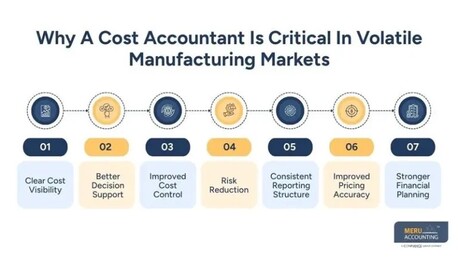
Manufacturing businesses often deal with changing material prices, supply delays, and shifting customer demands. A cost accountant helps companies stay steady during these challenges by tracking expenses clearly and keeping financial control organized.
By carefully monitoring production costs and overhead expenses, a cost accountant helps businesses make better decisions and protect profit margins, even when markets are unstable.
This blog explains how a cost accountant supports manufacturing companies through careful planning, expense tracking, and practical financial analysis. It also explains why cost accounting in the manufacturing industry is important for accurate pricing, budget control, and long-term growth.
What You Will Learn
• How a cost accountant supports daily operations and long-term planning
• How cost tracking and cost control help manage expenses
• How market price changes affect materials, labor, and overhead costs
• Why clear cost visibility matters during uncertain times
• How reliable cost data improves pricing and financial planning
• How small cost adjustments can improve profit margins
Understanding Market Challenges in Manufacturing
Raw Material Price Changes
Material prices often rise without warning. A cost accountant monitors these changes to reduce their impact.
Supply Chain Disruptions
Delays and shortages increase operating costs. Clear cost tracking shows the real financial effect.
Labor Cost Increases
Higher wages and overtime add pressure to production costs. Monitoring labor efficiency helps control expenses.
Energy and Utility Costs
Energy price increases directly affect manufacturing costs. Proper cost allocation shows the true cost of production.
Customer Pricing Pressure
Customers may resist price increases. Accurate cost data helps businesses set fair and realistic prices.
Why a Cost Accountant Is Important During Uncertain Times
Clear Cost Visibility
A cost accountant records all expenses properly, preventing hidden losses.
Better Decision-Making
Management relies on accurate cost reports instead of guesswork.
Stronger Cost Control
Regular reviews highlight unnecessary spending early.
Risk Reduction
Close monitoring reduces financial surprises and improves stability.
Accurate Pricing
Detailed cost information supports realistic pricing and protects margins.
Better Financial Planning
Cost insights help businesses plan according to changing market conditions.
How a Cost Accountant Controls Rising Production Costs
• Tracks material use and reduces waste
• Reviews labor performance to improve efficiency
• Examines production processes for cost gaps
• Monitors supplier pricing trends
• Reports cost changes clearly to management
Improving Pricing and Profit Margins
A cost accountant calculates the true cost of each product. This helps businesses:
• Set accurate selling prices
• Identify low-margin products
• Avoid selling below cost
• Adjust pricing based on customer-related expenses
• Focus on products with stronger margins
Correct cost allocation ensures every product shows its real profitability.
Budgeting and Planning in Uncertain Markets
A cost accountant supports:
• Realistic budgets based on actual data
• Flexible forecasts that adjust to price changes
• Planning for best- and worst-case cost scenarios
• Monitoring actual costs against budgets regularly
This helps manufacturing businesses stay financially prepared during uncertain periods.
Meru Accounting provides specialized accounting services for manufacturing businesses. Our services focus on accurate cost management, reporting, and financial control.
Key Takeaways
• A cost accountant improves cost control and financial clarity.
• Accurate cost tracking supports better business decisions.
• Proper cost allocation protects profit margins.
• Strong pricing depends on reliable cost data.
• Professional cost management supports long-term manufacturing success.
FOR MORE INFO: https://www.meruaccounting. ...