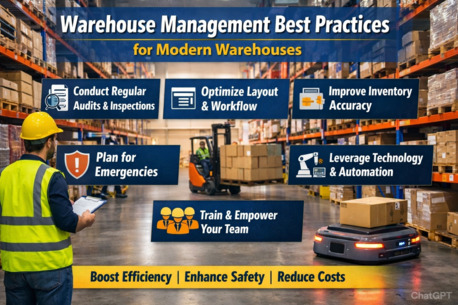
Regular warehouse audits and inspections help identify inefficiencies before they become costly problems. Optimizing warehouse layout reduces travel time, prevents congestion, and improves safety standards. Strong inventory management practices such as cycle counting, barcode scanning, and SKU standardization enhance stock accuracy and prevent stockouts or overstocking issues.
Leveraging modern technology like Warehouse Management Systems (WMS), automation tools, and integrated tracking systems provides real-time visibility and better decision-making. Additionally, workforce training, safety compliance, and clear accountability structures create a more productive and resilient operation.
By focusing on performance metrics such as order accuracy, labor productivity, and inventory turnover, businesses can continuously refine processes and scale efficiently. Whether managing a small warehouse or a large fulfillment center, applying these best practices builds a stronger, safer, and more profitable operation designed for long-term growth.