Modern manufacturing requires strong coordination between operations and finance. Aligning these areas helps businesses improve efficiency, control costs, and maintain long-term financial stability.
Understanding the Link Between Production and Financial Results
Production performance directly impacts financial outcomes. Output levels influence revenue, while production costs affect profitability and pricing decisions. Accounting for manufacturers ensures that these activities are recorded accurately so financial reports reflect real operational performance.
Inventory movement also affects cash flow and working capital. Proper accounting tracks inventory changes, helping businesses manage stock levels and avoid unnecessary costs. It also highlights waste, process losses, and quality issues that can reduce profitability if left unaddressed.
Labor efficiency and overhead allocation are equally important. When these costs are tracked correctly, manufacturers can understand true product costs and improve pricing strategies.
How Accounting Improves Efficiency and Financial Control
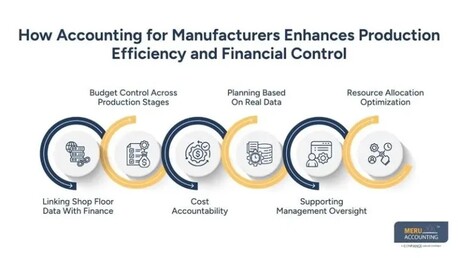
Accounting for manufacturers connects shop floor data with financial systems, creating a complete view of operations. This helps managers monitor spending, compare budgets with actual costs, and maintain accountability across departments.
Using accurate financial data allows businesses to plan production more effectively and allocate resources where they are needed most. It also supports management oversight by providing clear reports that show operational performance without disrupting workflows.
Supporting Better Production Decisions
Accurate accounting data helps manufacturers make informed decisions about pricing, production levels, and resource allocation. Product cost analysis provides insights into margins, while break-even analysis helps determine the production volume needed to cover costs.
Budget preparation becomes more reliable when based on real financial data. Managers can compare planned results with actual outcomes and take corrective action when needed. Long-term planning also improves because forecasts are based on accurate cost and performance data.
Improving Resource Allocation and Capacity Planning
Accounting for manufacturers helps track how materials, labor, and equipment are used across production processes. This helps reduce waste, improve workforce efficiency, and ensure equipment is used effectively.
Financial insights also support better production scheduling by aligning capacity with demand. When companies plan expansions, accounting data helps evaluate costs and expected returns, reducing financial risk.
The Role of Technology in Manufacturing Accounting
Technology and ERP systems improve accuracy by centralizing production and financial data. Real-time updates allow businesses to track costs as they occur, improving reporting and decision-making.
Better inventory tracking ensures stock levels are accurate across locations, while standardized reports improve consistency between teams. Technology also simplifies audits by maintaining organized and traceable records.
Aligning Production KPIs With Financial Reporting
Accounting for manufacturers helps connect operational metrics with financial performance. Cost per unit, production yield, labor ratios, and inventory turnover all provide insights into efficiency and profitability.
Tracking profit margins and machine utilization rates helps businesses understand the financial impact of production decisions. This alignment ensures managers have a complete view of performance.
Common Challenges Manufacturers Face
Many manufacturers struggle with incomplete cost allocation, delayed reporting, and inventory valuation issues. Data silos between departments can prevent accurate alignment between production and finance, while limited internal expertise can affect accuracy and compliance.
Addressing these challenges requires consistent processes, reliable systems, and clear reporting.
Professional Support for Manufacturing Accounting
Working with experts like Meru Accounting helps manufacturers maintain accurate records and gain clear financial insights. Professional support ensures better cost tracking, improved reporting, and stronger alignment between operations and financial outcomes.
Conclusion
Accounting for manufacturers is essential for connecting production performance with financial results. By tracking costs, monitoring efficiency, and aligning operational data with financial reporting, manufacturers can improve decision-making and maintain profitability.
With accurate accounting practices and the right tools, businesses can reduce waste, optimize resources, and support sustainable growth.
Key Takeaways
• Accounting for manufacturers links production activity with financial results
• Accurate cost tracking improves pricing and profitability
• Financial visibility supports better planning and operational control
• Technology improves reporting accuracy and efficiency
• Professional support strengthens financial alignment and compliance
FOR MORE INFO: https://www.meruaccounting. ...