With the right tools — such as Clio, QuickBooks, and Zoho Books — law firms can automate billing, manage taxes efficiently, track expenses accurately, and maintain full financial control.
This guide explains how modern accounting for law firms improves efficiency, compliance, and profitability.
Understanding the Fundamentals of Accounting for Law Firms
Trust Accounting
Law firms frequently manage client funds through trust accounts. Proper accounting for law firms ensures that these funds are handled separately, recorded accurately, and fully compliant with legal regulations. Mismanagement can lead to serious penalties and damage client trust.
Billing Management
Time-based billing is central to most legal practices. Structured accounting systems track billable hours, link expenses to client matters, and generate detailed invoices. Clear billing reduces disputes and improves transparency.
Expense Tracking
Monitoring expenses helps control overhead and increase profitability. Categorizing costs properly allows firms to identify unnecessary spending and improve cost efficiency.
Revenue Reporting
Accurate revenue reports provide insights into performance by client, case type, or practice area. This data supports better planning and growth strategies.
Compliance Requirements
Legal practices must meet strict financial and regulatory standards. Accounting for law firms ensures that trust balances, tax filings,and financial records remain accurate and audit-ready.
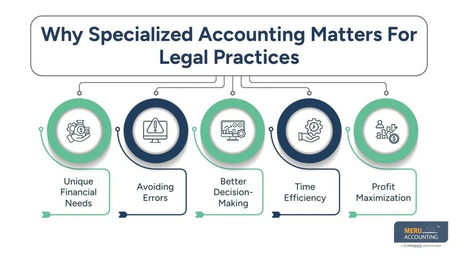
Why Specialized Accounting Matters for Legal Practices
Unique Financial Structures
Law firms manage retainers, contingency fees, and client trust funds. These structures require accounting systems built specifically for legal operations.
Error Prevention
Even small billing or tax errors can create compliance risks. Specialized accounting reduces the likelihood of costly mistakes.
Better Decision-Making
Clear financial reports help partners evaluate profitability, hire strategically, and plan for expansion.
Time Efficiency
Automation reduces manual data entry, allowing lawyers and staff to focus more on client service.
Profit Optimization
Structured accounting helps identify unbilled hours, overdue invoices, and cost-saving opportunities.
Choosing the Right Accounting Software for Small Law Firms
Clio – Legal-Focused Features
Clio is designed specifically for law firms. It simplifies trust accounting, time tracking, and legal billing compliance.
QuickBooks – Flexible and Reliable
QuickBooks offers detailed reporting, expense categorization, and strong integration capabilities. It is widely used for accounting for law firms due to its versatility.
Zoho Books – Affordable Cloud Solution
Zoho Books is ideal for smaller firms seeking automation and remote access. Its cloud-based design makes financial management accessible from anywhere.
Key Features to Consider
When selecting software for accounting for law firms, look for:
Accurate billable hour tracking
Trust account management
Expense categorization
Automated invoicing
Tax reporting tools
Scalable features for growth
To More information Contact Us
Visit Now: https://www.meruaccounting. ...
Website: httpswww.meruaccounting.com/
Email : [email protected]
Contact Number : +17149879001
Addresss : TX 75231 United States 26 Brodway 8th Floor, New york , NY 10004 United States