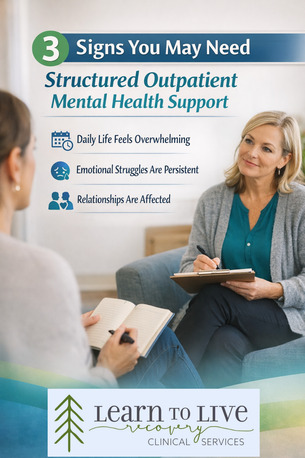
1. Daily Life Feels Overwhelming
If routine tasks like going to work, managing your home, or caring for your family feel increasingly unmanageable, it may indicate that stress, anxiety, or depression are taking a toll. Structured outpatient programs can help you build coping strategies to regain balance.
2. Emotional Struggles Are Persistent
Occasional sadness, irritability, or anxiety is normal, but persistent emotional struggles that last weeks or months could signal the need for professional support. Outpatient mental health services offer counseling and therapy to address these ongoing challenges effectively.
3. Relationships Are Affected
When communication with loved ones breaks down or conflicts escalate more than usual, it can be a sign that emotional or behavioral health needs attention. Learning strategies to manage emotions, set boundaries, and improve interpersonal skills is a core focus of structured programs.
4. Self-Care Starts to Slip
Neglecting basic self-care—like sleep, nutrition, or hygiene—can be a subtle but important sign that structured support could help. Outpatient programs often integrate wellness education alongside therapy to restore healthy routines.
5. Desire for Change, But Unsure How
Sometimes you know something isn’t right, but don’t know how to make a change on your own. Structured outpatient programs provide step-by-step guidance, accountability, and expert support to help you move forward safely.
Learn to Live Clinical Services in Washington, Missouri, provides trusted, evidence-based outpatient care tailored to meet individual needs. You don’t have to navigate these challenges alone—help is available, and seeking it is a sign of strength.
#MentalHealthSupport #OutpatientCare #BehavioralHealth #StructuredSupport