A structured bookkeeping system allows construction companies to monitor costs as work progresses, avoid billing mistakes, and maintain reliable financial records. It also supports better planning and smarter business decisions.
Why Construction Bookkeeping Is Different
Unlike many industries, construction finances are managed by project rather than by month alone. Each project has its own budget, timeline, and expenses, so tracking costs separately is essential.
A strong bookkeeping process in construction focuses on:
• Recording income and expenses for each project individually
• Grouping costs into categories such as labor, materials, equipment, and overhead
• Updating expenses regularly instead of waiting until project completion
• Keeping supporting documents like invoices and timesheets organized
This approach gives contractors a clear view of how every job is performing financially.
What Is Construction In Process (CIP) Accounting?
Construction in process accounting tracks costs for projects that are still underway. Since many construction jobs last months or years, expenses must be recorded before the work is finished.
This method helps businesses:
• See the value of unfinished work
• Keep project costs separate and accurate
• Match income with related expenses
• Produce more reliable financial reports during long projects
Key Parts of a Reliable Bookkeeping Process in Construction
Job Cost Codes – Create clear categories to track different types of expenses.
Labor Tracking – Assign employee hours to the correct project.
Material Monitoring – Link purchases to specific jobs to avoid confusion.
Equipment Cost Tracking – Record equipment usage based on actual project use.
Overhead Allocation – Spread shared business costs fairly across projects.
Regular Reviews – Check job cost reports often to catch issues early.
CIP Accounting – Record ongoing project costs correctly until completion.
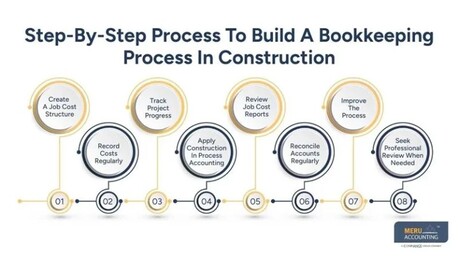
Steps to Build a Strong Bookkeeping System
1. Set Up Cost Categories
Create a structure for labor, materials, and other expenses.
2. Record Transactions Frequently
Enter costs daily or weekly to keep reports accurate.
3. Track Project Progress
Monitor how much work has been completed to match costs properly.
4. Apply Construction In Process Accounting
Record expenses for unfinished projects correctly.
5. Review Job Cost Reports
Compare estimated costs with actual spending.
6. Reconcile Accounts Regularly
Match records with bank statements and invoices.
7. Improve the System Over Time
Adjust processes as projects and business needs grow.
How Good Bookkeeping Improves Profitability
A reliable bookkeeping process in construction helps businesses:
• Understand project costs early
• Price future jobs more accurately
• Maintain steady cash flow
• Detect cost overruns quickly
• Report profits more accurately during ongoing projects
Common Mistakes to Avoid
• Using unclear cost categories
• Recording expenses too late
• Ignoring job cost reports
• Poor document management
• Not applying construction in process accounting
Avoiding these issues helps maintain accurate records and prevents financial surprises.
Why Professional Support Helps
Construction accounting requires careful tracking and consistent updates. Expert support can help set up systems, maintain accurate job costing, and produce easy-to-understand financial reports.
Meru Accounting understands construction-specific bookkeeping needs very well. We provide accurate advice tailored for contractor and project requirements.
Key Takeaways
• A bookkeeping process in construction tracks finances by project, not just by time period.
• Accurate job costing improves pricing and profitability.
• Construction in process accounting keeps unfinished projects financially accurate.
• Regular tracking and reviews prevent costly mistakes.
• Strong bookkeeping supports better decisions and business growth.
FOR MORE INFO: https://www.meruaccounting. ...