When lean manufacturing principles are implemented alongside effective bookkeeping practices, businesses can reduce errors, streamline operations, and maintain clearer financial records. Lean methods focus on eliminating waste, improving workflows, and ensuring every production activity adds value.
Combining lean practices with strong manufacturing bookkeeping systems helps companies gain better financial visibility, enabling informed decisions, improved cost control, and sustainable business growth.
Introduction to Manufacturing Bookkeeping and Lean Principles
Understanding Manufacturing Bookkeeping
Manufacturing bookkeeping refers to recording and managing financial transactions related to production activities. This includes tracking raw materials, labor costs, overhead expenses, and finished goods inventory.
Accurate bookkeeping enables manufacturers to evaluate production costs, set proper pricing strategies, and improve operational efficiency.
What Are Lean Manufacturing Principles?
Lean manufacturing principles focus on reducing waste, improving productivity, and delivering maximum value to customers. These principles guide companies in designing efficient workflows that minimize unnecessary costs and delays.
The Connection Between Lean Practices and Bookkeeping
Lean operations simplify production processes, which also makes manufacturing bookkeeping more accurate and manageable. By reducing redundant activities and improving inventory management, businesses can minimize financial discrepancies and bookkeeping errors.
Financial Visibility Through Lean
Lean manufacturing promotes clear documentation of materials, labor, and overhead costs. This transparency improves manufacturing bookkeeping accuracy, making it easier for businesses to monitor financial performance and identify cost-saving opportunities.
Strategic Decision Making
Accurate financial data generated through lean processes allows businesses to make strategic decisions regarding budgeting, resource allocation, and expansion planning.
Reliable manufacturing bookkeeping records also help companies forecast future expenses and manage cash flow more effectively.
Why Accurate Manufacturing Bookkeeping Matters
Cost Management
Precise bookkeeping allows manufacturers to track raw material costs, labor expenses, and overhead charges. This helps businesses maintain better control over production costs.
Compliance and Financial Reporting
Manufacturing companies must follow strict tax and regulatory requirements. Proper manufacturing bookkeeping ensures accurate reporting and reduces the risk of compliance issues.
Inventory Accuracy
Lean production often uses just-in-time inventory systems. Maintaining accurate bookkeeping ensures inventory levels match production records and financial statements.
Performance Monitoring
Detailed financial records help measure operational efficiency, production output, and waste reduction.
Financial Forecasting
Reliable bookkeeping data enables manufacturers to plan budgets and forecast future revenue and expenses more accurately.
Cost Analysis and Profitability
Accurate cost tracking helps businesses determine the true cost of production and set competitive pricing strategies.
Risk Management
Maintaining precise financial records helps identify financial risks early and prevents unexpected losses.
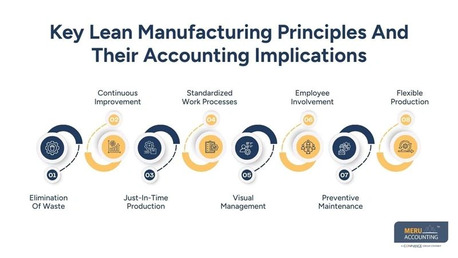
Lean Manufacturing Principles and Their Accounting Impact
Elimination of Waste
Reducing excess materials and unnecessary production steps simplifies cost tracking and improves bookkeeping accuracy.
Continuous Improvement
Regular process improvements reduce operational errors and improve financial reporting accuracy.
Just-In-Time Production
Producing only what is needed lowers inventory costs and requires accurate financial tracking to maintain proper records.
Standardized Workflows
Standardizing production procedures ensures consistent documentation, making manufacturing bookkeeping easier to maintain.
Visual Management
Lean tools such as workflow boards and production dashboards help businesses track operational data that supports accurate bookkeeping.
Employee Participation
When employees actively participate in process improvement, production data becomes more accurate and timely for accounting records.
Preventive Maintenance
Regular equipment maintenance reduces unexpected repair costs and helps maintain stable financial planning.
Flexible Production
Lean systems allow manufacturers to adjust production based on demand while maintaining accurate cost and inventory records.
To More information Contact Us
Visit Now: https://www.meruaccounting. ...
Website: httpswww.meruaccounting.com/
Email : [email protected]
Contact Number : +17149879001
Addresss : TX 75231 United States 26 Brodway 8th Floor, New york , NY 10004 United States