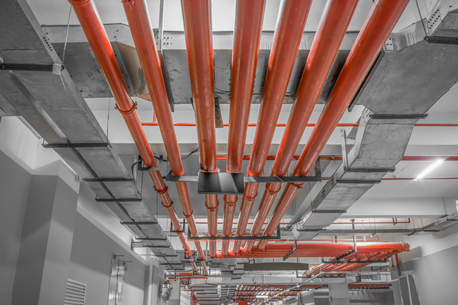
Tekzone is a prominent name in the UAE industrial contracting market. Based in Dubai, this industrial construction company has divisions specializing in mechanical and electrical/instrumentation work. Their project delivery encompasses design, construction, commissioning, and handover.
What “gas piping” vs “process piping” typically means on UAE projects
Gas piping (fuel gas / industrial gas lines)
Gas piping work generally includes distribution lines and associated mechanical works (routing, supports, isolation valves, testing, purging/commissioning, and handover documentation). Because gas is often flammable and systems can be pressurized, the focus is heavily on risk control, test discipline, and site safety procedures.
Process piping (plant piping for industrial fluids)
Process piping refers to the piping systems used in industrial facilities to manage or transfer various process fluids, including chemicals, petroleum products, steam, air, water, refrigerants, and more. Industrial plants and terminals typically house these systems. A key global standard relevant to many projects is ASME B31.3 Process Piping, which outlines essential requirements for design, materials, fabrication, inspection, examination, acceptance criteria, and testing. These guidelines aim to minimize the risk of failure in piping systems.
A practical “end-to-end” scope you should expect from a piping contractor
A capable contractor will usually support most (or all) of the following:
Engineering support, constructability inputs, and planning
Material control (pipes, fittings, valves), traceability, and QA/QC coordination
Fabrication (spooling), installation, and tie-ins
Inspection/examination planning (e.g., visual checks, NDT as applicable)
Testing, pre-commissioning, commissioning support, and handover packs
Tekzone openly shares its complete ability to handle industrial projects, which includes design, getting necessary approvals, testing, starting up systems, and handing over projects—along with mechanical tasks like
What to look for when hiring a Process piping contracting company in the UAE
Prioritize proven experience and execution discipline over marketing:
Demonstrate your expertise in your industry, as oil and gas differ significantly from food and pharmaceutical piping in terms of materials, hygiene requirements, and documentation standards.
Clear QA/QC workflow (ITPs, weld mapping, material traceability, test packs)
Safety systems and permit-to-work maturity
Ability to mobilize for shutdowns/critical tie-ins (planning depth matters)
Capability to manage complex site conditions (crossings, dewatering, coatings, corrosion protection, etc.)
Why Tekzone is often shortlisted (capabilities they publicly highlight)
1) Multi-sector industrial delivery
Tekzone operates in oil & gas, industrial production, food and dairy, and power and chemical sectors, providing coverage in mechanical automation and electrical systems.
2) Pipeline and piping strengths (including cross-country capabilities)
For long-distance or complicated pipeline projects, Tekzone describes a cross-country pipeline plan that covers engineering and design, coated pipelines (3LPE, FBE, and insulation), challenging crossings, removing water and using sheet piling, cathodic protection, hot tapping and pigging, nitrogen purging, and cold cutting.
3) A stated focus on safety, efficiency, and sustainability in pipeline construction
Tekzone emphasizes the adoption of advanced technologies, cross-country pipeline planning methods, sustainable practices, and a priority on safety in oil and gas pipeline construction and delivery.
Conclusion
When assessing a gas piping contracting company or a process piping contracting company in the UAE, it’s essential to prioritize evidence of safe execution. Key factors to consider include documented quality assurance and quality control (QA/QC) systems, rigorous testing protocols, skilled site supervision, and relevant industry experience. Tekzone is recognized as a leading industrial contractor in the UAE, demonstrating its mechanical and piping capabilities across various sectors, together with its expertise in cross-country pipeline projects. The company emphasizes safety, efficiency, and modern construction techniques.
FAQs
Q1) What is the difference between gas piping and process piping?
Gas piping refers to systems designed for transporting fuel or industrial gases. These systems are required to follow strict safety regulations and commissioning procedures, which include testing, purging, and leak detection. In contrast, process piping encompasses a broader range of industrial fluids used within plants and typically adheres to specific code requirements, such as ASME B31.3, as dictated by the project's specifications.
Q2) What should I ask a contractor before awarding a piping job?
Request their QA/QC plan (ITPs, weld mapping, test packs), safety plan, similar project references, and details on how they manage coatings/corrosion protection, crossings, and commissioning readiness.
Q3) Does Tekzone handle pipeline work beyond plant boundaries?
Tekzone advertises cross-country pipeline services, including coated pipelines, crossings, dewatering/sheet piling, cathodic protection, pigging/hot tapping, nitrogen purging, and automatic welding.
Q4) Can one contractor handle both piping and broader industrial scopes, such as engineering, procurement, and construction (EPC), and shutdowns?
Yes—some industrial contractors package piping with mechanical works, testing/commissioning, and broader EPC (engineering, procurement, and construction) or shutdown execution. Tekzone describes EPC-oriented scope elements and shutdown project delivery alongside piping-related work.
Q5) How do I verify whether a contractor is a good fit for food/pharma piping vs. oil & gas piping?
Request sector-specific references and deliverable samples, such as documentation packs, material standards, and cleanliness/hygiene procedures. Tekzone specializes in positions for food, pharmaceutical, and dairy plants, including hygienic piping and process tanks.