Law firms often handle money that belongs to clients, such as retainers or settlement funds. Because of this, their financial records must follow strict rules. Legal bookkeeping services help track these funds accurately and ensure they are never mixed with the firm’s operating money.
Another important part of legal bookkeeping is recording billable hours, retainers, and case-related expenses. Accurate tracking helps law firms maintain clear records and avoid compliance issues. A professional legal bookkeeper ensures that financial processes are organized, accurate, and aligned with regulatory requirements.
By using legal bookkeeping services, law firms can reduce the risk of errors, stay compliant with trust account rules, and maintain clear financial records. This allows attorneys to focus on legal work while their financial management remains accurate and reliable.
What You Will Learn From This Blog
• What legal bookkeeping services are
• How they differ from regular bookkeeping
• Why law firms need specialized bookkeeping support
• How client trust accounts are handled
• Benefits of outsourcing legal bookkeeping services
• Key skills required for legal bookkeepers
• Common bookkeeping challenges in law firms
• Best practices for maintaining accurate legal financial records
Introduction to Legal Bookkeeping Services
Legal bookkeeping services involve recording and managing the financial transactions of law firms while following strict compliance rules. These services are designed to support the unique financial needs of legal practices, such as managing client retainers, billable hours, and trust accounts.
The main goal of legal bookkeeping is to ensure financial accuracy and prevent the misuse of client funds. Law firms must maintain clear records and follow regulatory requirements, and professional bookkeeping helps them do that efficiently.
Since lawyers often handle sensitive client funds, careful financial tracking is essential. Legal bookkeeping services help law firms stay compliant, avoid penalties, and maintain trust with clients.
A skilled legal bookkeeper manages trust accounts, tracks expenses, prepares financial reports, and ensures that all financial activities follow legal guidelines. This helps law firms keep their finances organized and compliant while focusing on serving their clients.
Key Differences Between Legal Bookkeeping Services and Regular Bookkeeping
Handling Client Funds
Legal bookkeeping services manage client trust accounts and ensure client money stays separate from business funds. Regular bookkeeping mainly tracks business income and expenses.
Compliance Requirements
Legal bookkeeping must follow strict legal and regulatory rules. Regular bookkeeping generally follows standard accounting practices.
Complex Transactions
Legal bookkeeping often deals with retainers, settlements, and escrow funds. Regular bookkeeping focuses on routine business transactions.
Reporting
Legal bookkeeping includes trust account reports and billable hour tracking. Regular bookkeeping usually provides standard financial reports.
Risk Management
Legal bookkeeping reduces the risk of compliance violations and financial errors related to client funds, while regular bookkeeping has fewer regulatory risks.
Why Compliance Is Important in Legal Accounting
Following Bar Rules
Legal bookkeeping services help law firms follow professional rules set by regulatory bodies.
Managing IOLTA Accounts
Proper management of trust accounts ensures client funds are handled correctly.
Protecting Clients
Clear and accurate bookkeeping ensures client money is used only for its intended purpose.
Avoiding Penalties
Proper financial records help law firms avoid fines or disciplinary action.
Audit Preparation
Well-maintained records make audits easier and less stressful for law firms.
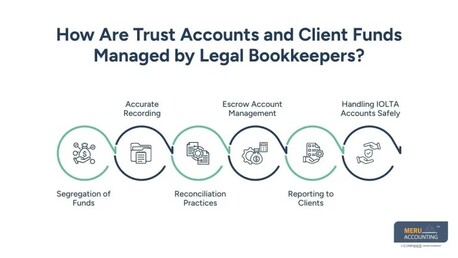
How Legal Bookkeepers Manage Client Trust Accounts
Separate Accounts
Client funds are kept in separate trust accounts to prevent misuse.
Accurate Records
Every transaction involving client money is carefully recorded.
Regular Reconciliation
Trust accounts are reviewed regularly to ensure balances are correct.
Escrow Tracking
Funds held in escrow are monitored until they are properly released.
Clear Client Reports
Clients can receive statements showing how their funds are managed.
Benefits of Outsourcing Legal Bookkeeping Services
More Time for Legal Work
Lawyers can focus on clients instead of financial tasks.
Lower Costs
Outsourcing can be more affordable than hiring a full in-house team.
Expert Support
Professional bookkeepers understand legal compliance and trust accounting.
Reduced Risk
Specialized services help prevent financial mistakes and compliance issues.
Better Reporting
Detailed reports help law firms make informed financial decisions.
Skills Needed for a Legal Bookkeeper
• Understanding of legal compliance rules
• Strong attention to detail
• Experience managing trust accounts
• Ability to prepare clear financial reports
• Problem-solving skills to fix discrepancies
• Good communication with lawyers and clients
Best Practices for Legal Bookkeeping Services
Keep Accounts Separate
Client funds must always be kept separate from business funds.
Reconcile Accounts Regularly
Monthly checks help identify errors early.
Maintain Clear Records
Invoices, receipts, and transaction records should always be documented.
Use Legal Accounting Software
Automation improves accuracy and simplifies reporting.
Conduct Regular Audits
Periodic reviews help ensure compliance and financial control.
Train Staff
Employees handling finances should understand trust accounting rules.
Choosing the Right Legal Bookkeeping Service Provider
When selecting a provider for legal bookkeeping services, law firms should look for experience in legal accounting, knowledge of regulatory rules, positive client reviews, and clear pricing.
Meru Accounting has a team of professional legal bookkeepers trained to handle complex trust accounting.
Key Takeaways
• Legal bookkeeping services are designed specifically for law firms.
• They focus on managing client funds and meeting strict compliance rules.
• Professional legal bookkeepers ensure accurate trust account management.
• Outsourcing legal bookkeeping services can reduce costs and improve efficiency.
• Choosing the right bookkeeping provider helps maintain transparency and financial stability for law firms.
FOR MORE INFO: https://www.meruaccounting. ...