What Is Trust Tax Preparation?
Trust tax preparation involves reporting the income, deductions, and distributions of a trust according to tax regulations. Trusts may generate income from investments, rent, interest, or dividends, all of which must be properly recorded and reported.
Trustees are responsible for managing these tasks, while beneficiaries may also need to report income they receive.
Types of Trusts and Their Tax Impact
• Revocable trusts – Income is usually taxed to the grantor
• Irrevocable trusts – Treated as separate taxable entities
• Grantor trusts – Grantor handles the tax responsibility
• Non-grantor trusts – Trust files its own tax returns
• Charitable trusts – Offer tax benefits but require careful compliance
Each structure affects how trust tax preparation is handled.
Key Filing Requirements
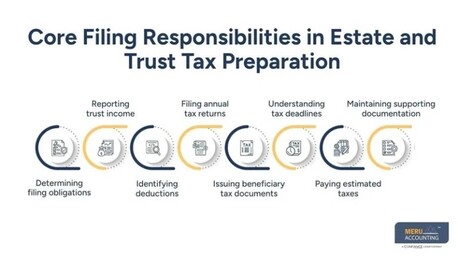
Trustees must follow several important steps:
• Determine if the trust must file a return
• Report all trust income accurately
• Identify eligible deductions
• File annual tax returns (such as Form 1041)
• Issue beneficiary documents (Schedule K-1)
• Meet tax deadlines
• Pay estimated taxes if required
• Maintain proper documentation
Common Challenges
• Complex tax rules specific to trusts
• Managing multiple income sources
• Allocating income correctly to beneficiaries
• Keeping accurate records
• Meeting strict filing deadlines
These challenges make trust tax preparation more detailed than standard tax filing.
Best Practices for Trust Tax Preparation
• Keep financial records well organized
• Track income and distributions regularly
• Review trust documents carefully
• Work with qualified tax professionals
• Plan ahead for tax efficiency
Following these practices helps ensure smooth and accurate tax compliance.
Important Tax Forms
• Form 1041 – Main trust tax return
• Schedule K-1 – Reports beneficiary income
• Estimated tax payment forms
• State-specific tax forms
• Supporting documentation
Record-Keeping Tips
• Maintain detailed transaction records
• Store tax documents securely
• Track beneficiary distributions
• Keep investment statements
• Save past tax filings for reference
Good record-keeping makes trust tax preparation easier and more accurate.
Key Takeaways
• Trust tax preparation ensures proper tax compliance for trusts
• Different trust types have different tax rules
• Filing includes reporting income, deductions, and distributions
• Organized records simplify the process
• Professional support helps manage complex tax situations
By following proper trust tax preparation practices, trustees can avoid errors, meet deadlines, and manage trust finances with confidence.
FOR MORE INFO: https://www.meruaccounting. ...