Medical and procedural treatments-
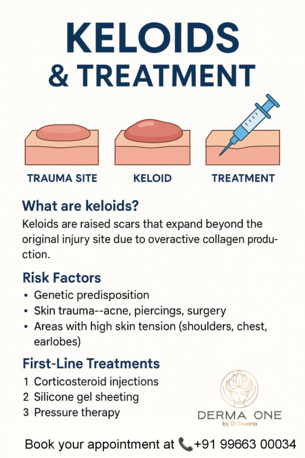
Corticosteroid injections: Injections, often with triamcinolone acetonide, are a common first-line treatment to soften the scar and reduce itching, pain, and swelling.
Silicone gel sheets or compression: Applying pressure with silicone gel sheeting or compression garments can help flatten a keloid and is often recommended for prevention or as a conservative treatment.
Cryotherapy: This involves freezing the keloid with liquid nitrogen. It can be used alone or combined with steroid injections for better results, but can cause temporary side effects like pain or depigmentation.
Laser therapy: Pulsed-dye lasers can help reduce the bulk of the keloid and make it flatter.
Surgical removal: While surgeons can remove the keloid, recurrence is very common. To prevent this, surgical removal is often paired with another therapy, such as radiation therapy or steroid injections.
Radiation therapy: This is often used after surgical removal to significantly lower the recurrence rate.
Other treatments
Compression: Devices like pressure earrings or bandages can be effective, especially for preventing recurrence after surgical removal.
Topical treatments: Some creams or gels containing ingredients like onion extract have shown promise in reducing scar height and improving healing time, says Healthline.
Other injections: Other medications like 5-fluorouracil (5-FU) or bleomycin can be injected, often in combination with corticosteroids, to treat keloids.
For more information contact us at 09966300034