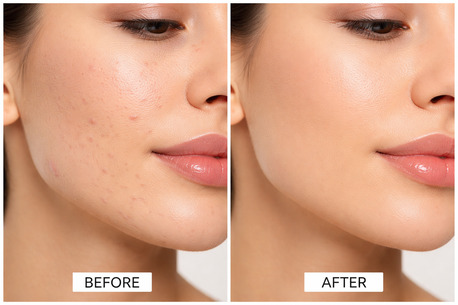
If you’re searching for acne scar removal Dubai options, you’ll quickly notice two things: (1) there isn’t a single “best” treatment for everyone, and (2) the best results usually come from a custom combination plan based on your scar type, skin tone, downtime tolerance, and budget. This guide breaks down the most common in-clinic options, what they’re best for, and what to expect—plus a spotlight on DrypSkin as one of the clinics' many patients consider in Dubai.
Types of Acne Scars and How to Identify Them (because treatment depends on them).
Most “true” acne scars are depressed scars (sunken marks) commonly grouped into:
Icepick scars: narrow, deep, “V-shaped” tracts (often the hardest to treat with resurfacing alone)
Boxcar scars: wider, sharply edged depressions
Rolling scars: broad, wavy texture changes often related to tethering under the skin
A major review summarizes these categories and notes that scar depth and morphology heavily influence which procedures work best. For example, icepick scars often need focal techniques (like CROSS or punch methods), while rolling scars often benefit from subcision and collagen-stimulating procedures.
Top Acne Scar Removal Treatments in Dubai Clinics
1) TCA CROSS: best known for icepick / narrow, deep scars
What it is: A dermatologist applies high‑concentration TCA into the scar to trigger controlled inflammation and collagen remodeling.
What results can look like: DermNet notes it’s “moderately effective,” with many patients seeing around a 1–2 grade improvement over ~6 months, and that complete resolution is unlikely with CROSS alone.
Downtime and risks to be aware of include frosting lasting for hours, redness and soreness for 1 to 2 days, and scabbing that typically sheds in about 3 to 7 days. Pigment changes, such as post-inflammatory hyperpigmentation (PIH) or hypopigmentation, are key considerations—especially for deeper skin tones—so sun protection is essential.
2) Microneedling (and RF Microneedling): versatile texture improvement with collagen stimulation
Why it’s popular: It can help overall texture and certain depressed scars with generally manageable downtime—often a go-to when clinicians want collagen remodeling without aggressive heat.
A combination-approach paper highlights that microneedling is frequently favored for Fitzpatrick IV–VI skin types to reduce post‑inflammatory hyperpigmentation risk compared with more aggressive thermal resurfacing.
Watch to understand it quickly: microneedling education videos can clarify why multiple sessions are common and why technique matters.
3) Subcision: often key for “tethered” rolling scars
If scars are “pulled down” by fibrous bands under the skin, resurfacing alone may not lift them. Subcision mechanically releases tethering so the surface can sit more smoothly.
In real treatments, doctors often combine multiple techniques in a specific order: focal chemical reconstruction first (CROSS), then subcision, and only after that microneedling/laser, because doing needling/laser before subcision can reduce visibility and precision for the subcision step.
4) Fractional laser resurfacing (including CO₂ fractional): powerful but downtime- and skin-type dependent
Laser resurfacing can be excellent for boxcar and rolling scars, but it must be chosen carefully based on:
skin tone (PIH risk),
downtime tolerance,
scar depth and distribution.
The same combination-approach paper notes that Skin Types II–III may choose fractional CO₂/erbium, while microneedling is often preferred for IV–VI in many protocols.
Why combination plans usually outperform “single treatment” plans
The evidence-based theme across major clinical discussions is consistent: different scars respond to different tools, so mixing methods is common (e.g., CROSS for icepick + subcision for tethering + microneedling/laser for surface blending).
One combination protocol explicitly warns that microneedling or fractionated ablative laser shouldn’t be done before subcision because it can hinder visibility during subcision.
Spotlight: DrypSKin (Dubai) for acne scar removal
If you’re comparing providers for acne scar removal in Dubai, one clinic you’ll see mentioned is DrypSKin. The clinic describes itself as an aesthetic and well-being clinic and positions its services around looking and feeling your best “inside and outside.”
On its acne-scar page, DrypSkin lists acne-scar-related options, including:
Carbon laser peel (noted for acne, pores, oily skin, and tone concerns)
Glutathione (described on the page as helpful for acne scars, hyperpigmentation, and dark spots, with brightening and wound-healing support)
It also emphasizes that the “best” treatment depends on the type and depth of scars.
If you’re considering the clinic, the most important next step is an in-person scar assessment so the plan matches your scar type (ice pick/boxcar/rolling) and skin’s pigmentation risk (especially relevant in sunny climates).
What results can you reasonably anticipate?
Improvement is usually gradual and often requires multiple sessions.
Some techniques (like TCA CROSS) may improve scar appearance, but complete removal is uncommon with one method alone.
The biggest “game changer” is often matching the right procedure to the scar type rather than repeating one treatment that isn’t suited to your scar pattern.
Conclusion
Choosing the right acne scar removal Dubai plan requires diagnosis and customization: determine whether you have icepick, boxcar, rolling, or mixed scars; select techniques appropriate for these scars; and consider your skin tone and tolerance to downtime. Research shows that using a mix of treatments (like CROSS, subcision, and microneedling or laser) is often the best way to safely and effectively address
Clinics like DrypSkin present multiple scar-related options and emphasize that the best choice depends on scar type and depth, making a professional assessment the key first step.
FAQs (Acne Scar Removal Dubai)
Q1) What is the best treatment for acne scar removal in Dubai?
There’s no single best treatment. The best option depends on whether scars are icepick, boxcar, rolling, or mixed, and your skin’s pigment sensitivity. Reviews emphasize tailoring treatments by scar type.
Q2) Is TCA CROSS safe, and what downtime should I expect?
When performed properly, it’s commonly used as an outpatient technique for atrophic acne scars. Expect frosting for up to ~12 hours, redness/soreness for 24–48 hours, and scabbing that typically sheds within ~3–7 days; pigment changes are a known risk, so sunscreen is important.
Q3) Why do many dermatologists recommend combination treatment for acne scars?
Because different scars respond to different tools (e.g., tethered rolling scars often need subcision, while icepick scars may need CROSS). Combination protocols also stress correct sequencing to keep procedures precise.
Q4) Should subcision be done before microneedling or frac