- Member since: July 2025
- Posted:
- Category: Health
- Region: Visakhapatnam (Visakhapatnam)
- Posting ID: 62860519
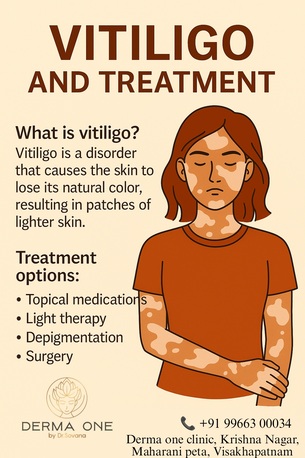
Vitiligo treatment aims to restore skin pigment and manage its progression. Common treatments include topical corticosteroids, calcineurin inhibitors, phototherapy, and in some cases, surgical interventions like melanocyte transplantation. Camouflage options like makeup and self-tanners can also help manage the appearance of vitiligo. Topical Corticosteroids: These creams or ointments are often a first-line treatment, helping to reduce inflammation and potentially restore some skin color. They are typically applied to the affected skin areas once a day. Calcineurin Inhibitors: Tacrolimus and pimecrolimus are topical immunomodulators that can be used on sensitive areas like the face, especially for infants and children. Phototherapy: This involves exposing the skin to controlled amounts of ultraviolet (UV) light, which can stimulate repigmentation. UVB and UVA light therapy, sometimes combined with oral psoralen medication, are options. Surgical Treatments: For stable vitiligo, melanocyte transplantation involves transferring melanocytes (pigment-producing cells) from healthy skin to the affected areas. Depigmentation Therapy: In cases of extensive vitiligo, where the condition affects over 50% of the body, depigmentation therapy might be considered to lighten the remaining pigmented skin and create a more uniform skin tone. For more information consult our expert Dr Sushree Sovana at Derma one clinic, Viskakhapatnam