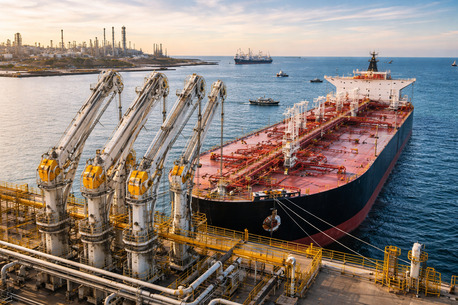
Downtime at marine terminals isn’t just an inconvenience—it’s a costly disruption. Delays in fluid transfer operations can lead to revenue loss, safety risks, and environmental concerns. That’s why precision in Marine Loading Arms (MLA) is essential for modern port and terminal operations.
From oil refineries to LNG terminals, marine loading arms play a critical role in ensuring safe, efficient, and uninterrupted transfer of liquids and gases between vessels and onshore facilities.
Why Marine Loading Arms are Critical for Modern Terminals
Marine loading arms are precision-engineered systems that enable the safe and efficient transfer of fluids, including crude oil, petroleum products, and chemicals, between vessels and storage facilities. They are made of articulated steel pipes with swivel joints, allowing them to move in response to vessel motion caused by tidal, wind, and wave forces.
Unlike hose systems, they are designed for high-pressure, high-volume transfers, making them highly effective for handling large vessels.
Importance of Marine Loading Arms Installation
The installation of marine loading arms is vital in ensuring the following:
1. Operational Safety
Marine loading arms are utilized in the transfer of hazardous materials, such as oil and gas. This ensures that there is no leakage or accident during transfer.
2. Efficient Fluid Transfer
They enable faster transfer operations compared to traditional hose systems.
3. Environmental Protection
The utilization of sophisticated systems for sealing and emergency releases prevents the possibility of contamination and environmental hazards.
4. Long-Term Reliability
A professionally installed MLA system provides durability and minimizes maintenance problems.
The main components of a marine loading arm system include the following:
Base riser and swivel joints
Inboard and outboard arms
Counterweight or balancing system
Hydraulic or manual control system
Emergency Release System (ERS)
Quick connect/disconnect couplings.
The above-mentioned components of a marine loading arm system collectively provide a smooth operation and connection between the terminal and the vessel.
MLA system Installation Process
1. Site Assessment and Engineering Design
The initial process includes an assessment of:
The jetty’s structure and load-carrying ability
The vessel’s size and operating conditions
Environmental conditions such as tides and wind
This information helps in designing a customized MLA system.
2. Foundation Design and Civil Works
Foundations play a significant role in providing a solid base to withstand the mechanical loads and operational forces. Strong foundations are designed to withstand:
Heavyweight of equipment
Vessel movements
Environmental conditions
3. Equipment Procurement
Reliable equipment, such as MLAs, needs to be procured from reputable OEMs to ensure:
Compliance with international standards
High durability
Efficient operation
4. Mechanical Installation
This stage entails:
The placement and installation of the loading arms
Alignment of the swivel joints and piping systems
Installation of the hydraulic and electrical systems
This process requires specialized equipment and technicians for precise installation.
5. System Integration
In this stage, the integration of various systems in the MLA, including:
Control panels
Instrumentation systems
Monitoring systems
This equipment helps ensure the safe and efficient operation of the loading process.
6. Testing and Commissioning
Before the MLA is put into operation, testing and commissioning are conducted to ensure that the system is functioning as expected and meets all safety requirements, including:
Functional testing
Pressure testing
Safety testing
Applications of Marine Loading Arms
Marine loading arms are used in the following industries:
Oil & Gas Terminals
Used for transferring crude oil, refined products, and LNG products between vessels and storage facilities.
Chemical Industries
This is for handling hazardous and volatile chemicals while maintaining high safety standards.
Petrochemical Plants
This is for the efficient transfer of bulk liquids in high-scale operations.
Ports and Marine Logistics
Ports and marine logistics play a crucial role in facilitating loading/unloading operations for various cargo types.
Challenges in the Installation of MLA
Even though MLAs have several benefits, the installation process is not without its challenges, such as:
Engineering complexity
Marine environment
Safety compliance
Alignment and calibration
Thorough planning and professional execution are crucial for overcoming potential challenges during installation.
Why Professional Installation Matters
Marine loading arms endure extreme working conditions, including high pressure, corrosion, and continuous movement. If these arms are not properly installed, there are risks of:
Failure of the equipment
Safety risks
Downtime
Professionals guarantee:
Proper installation
Adherence to industry standards
Long-term system performance
Providers of comprehensive marine loading system solutions deliver significant advantages that help ensure project success.
Future Trends in Marine Loading Arms
The industry continues to improve with technologies such as:
Automation and remote monitoring
Smart sensors for predictive maintenance
Improved safety systems
Integration with digital control systems
These advancements are enhancing the efficiency and safety of MLA systems.
FAQs
Q1. What is a marine loading arm?
A marine loading arm is a mechanical system used to transfer liquids and gases between ships and onshore terminals.
Q2. Where are marine loading arms typically utilized?
Marine loading arms are essential for fluid transfer operations and are widely employed in industries such as oil and gas, chemicals, LNG, and marine ports.
Q3. What is the benefit of using marine loading arms over hoses?
Marine loading arms provide safer, faster, and more efficient transfer of liquids and gases, particularly in high-pressure, high-volume operations.
Q4. What is the time required to install marine loading arms