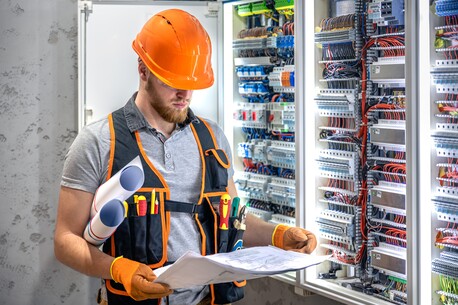
An experienced EPC contractor's responsibilities go beyond installing wires and equipment. They involve planning, coordination, engineering support, commissioning, troubleshooting, and ensuring the seamless operation of systems. This integrated approach can significantly affect project timelines and lifecycle costs, especially in complex projects.
The Expanding Role of an Electrical and Mechanical Contractor
As industrial and commercial facilities become more advanced, clients are increasingly seeking a contractor capable of managing multiple technical disciplines under one roof. A skilled electromechanical contractor should be knowledgeable about mechanical and electrical installations, instrumentation, automation, safety standards, and the practical aspects of construction execution.
This expertise is particularly crucial in industries such as oil and gas, food processing, pharmaceuticals, utilities, and industrial production, where even minor miscoordination in installations can lead to inefficiencies and cost overruns. Consequently, project owners are increasingly looking for contractors who offer comprehensive solutions rather than fragmented ones.
What Clients Should Look for in an Electrical and Mechanical Contractor
When evaluating an EPC contractor, clients often look beyond just price. Key factors include technical experience, project management skills, safety standards, workforce quality, and industry knowledge. A contractor with a solid track record in shutdown contracts, industrial automation, and both brownfield and greenfield developments tends to inspire confidence in high-value projects.
Adaptability is also crucial, as each contract may require different types of support, such as fabrication, design coordination, or commissioning. A contractor demonstrating flexibility in meeting specific project needs is more likely to deliver effective, results-driven solutions.
Why Integrated Services Matter
One of the main advantages of working with a full-service electrical and mechanical contractor is better coordination between disciplines. Mechanical works often depend on electrical systems, while electrical works must align with structural layouts, automation requirements, and equipment interfaces. Cohesive management of these scopes enhances communication and facilitates smoother execution.
Integrated delivery can also help reduce risk. Instead of different vendors assigning blame when issues arise, a single contractor with broader responsibility can streamline problem-solving and maintain accountability. That degree of control can be a major operational advantage for clients overseeing plant expansion or industrial construction.
In practical terms, misalignment between mechanical and electrical systems can result in costly rework, project delays, and operational inefficiencies during commissioning.
Tekzone as a Notable Example in the UAE Market
Tekzone is a leading industrial construction and electromechanical contracting firm based in Dubai, UAE. With nearly two decades of experience, it specializes in mechanical, electrical, and instrumentation work, industrial automation, and civil construction. The company serves various sectors, including oil and gas, food, pharmaceuticals, and power, and operates in Dubai, Abu Dhabi, Sharjah, Saudi Arabia, and India.
Tekzone highlights its commitment to MEP services, engineering solutions, infrastructure development, and energy efficiency, positioning itself as a key player in supporting industrial growth in the UAE. Its strong electromechanical capabilities make it a noteworthy option for managing electrical and mechanical projects in critical economic sectors.
The Importance of Industry Experience
An electromechanical contractor with specialized knowledge brings considerable value that extends beyond just equipment installation. In industries such as food, pharmaceuticals, and oil and gas, understanding specific process requirements—like hygienic piping, compliance, and safety—is essential. This expertise reduces the learning curve and enhances decision-making during project execution and maintenance, ultimately benefiting the client.
Safety, Quality, and Long-Term Reliability
Safety and quality are crucial elements of the value provided by electrical and mechanical contractors. These systems are integral to the overall operation of a facility rather than functioning as standalone elements. Poor workmanship and inadequate planning can result in safety hazards, increased downtime, and higher maintenance costs in the long run.
Effective contractors set themselves apart through their execution, processes, supervision, and approach to testing and commissioning. This distinction is particularly important in industrial settings, where downtime can be expensive and adherence to regulations is critical.
Choosing a Contractor for the Future, Not Just the Present
The best MEP contractor is not always the one that offers the lowest initial cost. In many cases, the better choice is the contractor that understands lifecycle value. This includes energy efficiency, maintainability, system integration, scalability, and the ability to support future operational needs.
As facilities become smarter and more automated, contractors who can bridge traditional construction skills with modern engineering and control systems will likely remain in demand. Clients increasingly need partners who can contribute to both immediate execution and long-term performance.
Conclusion
Choosing the right electrical and mechanical contractor is crucial for project quality, safety, and efficiency. In today’s industrial environment, integrated electromechanical expertise is essential. Companies that combine hands-on experience with engineering skills and industry knowledge are better positioned to deliver long-term benefits.
In the UAE, Tekzone stands out with a strong reputation in industrial construction, electromechanical works, and automation. Specializing in mechanical, electrical, and industrial projects, Tekzone is a valuable partner for businesses assessing contractors for industrial or infrastructure projects.
FAQs
Q1. What is the role of an electrical and mechanical contractor?
An industrial systems contractor handles the installation, coordination, and often maintenance of electrical and mechanical systems within a project. This may include power distribution, instrumentation, piping, HVAC-related works, equipment installation, automation support, and commissioning.
Q2. Why is it better to hire an integrated electrical and mechanical contractor?
An integrated industrial systems contractor can improve coordination between disciplines, reduce delays, limit rework, and provide clearer accountability. This is especially valuable in industrial and infrastructure projects where systems are closely interconnected.
Q3. What industries commonly require an electrical and mechanical contractor?
Industries that commonly require an electrical and mechanical contractor include oil and gas, food and beverage, pharm