This guide explains estate and trust tax preparation in a simple way for trustees, executors, and beneficiaries. With proper planning, you can meet tax rules, avoid penalties, and ensure assets are handled smoothly.
What You’ll Learn
• Why estate and trust tax preparation is important
• Key steps to file correctly
• Important documents and tax forms
• How to report income properly
• How professional help can simplify the process
Understanding Estate and Trust Taxes
An estate includes everything a person owns at the time of death, while a trust is created to manage and distribute assets. Both require proper estate and trust tax preparation to report income and follow tax rules.
Executors and trustees are responsible for collecting records, filing taxes, and distributing assets. Since deadlines and requirements differ, staying organized is important to avoid delays or penalties.
Documents You’ll Need
• Death certificate
• Will or trust agreement
• Bank and investment statements
• Previous tax returns
• Receipts for expenses (legal, funeral, administrative)
Keeping these ready makes estate and trust tax preparation faster and more accurate.
Key Tax Forms
• Form 1041 for income reporting
• Schedule K-1 for beneficiaries
• Form 706 for large estates
• State-specific forms if required
Filing the correct forms on time is essential to avoid penalties.
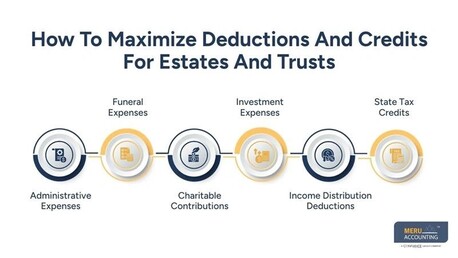
Deductions You Can Claim
• Legal and administrative costs
• Funeral expenses (in some cases)
• Charitable donations
• Investment-related expenses
• Income distributed to beneficiaries
Using these deductions properly can lower overall tax liability.
Reporting Income Correctly
Include all types of income such as:
• Interest and dividends
• Rental income
• Capital gains or losses
• Business income (if applicable)
Accurate records make estate and trust tax preparation smoother and reduce the risk of errors.
Common Mistakes to Avoid
• Reporting the same income twice
• Missing valid deductions
• Filing late
• Using incorrect forms
• Entering wrong beneficiary details
Careful review helps prevent costly issues.
Why Professional Help Matters
Experts can handle complex situations, reduce errors, and save time. They also help with planning strategies to lower taxes and ensure everything is filed correctly.
Key Takeaways
• Estate and trust tax preparation helps ensure compliance and avoid penalties
• Organized records and correct forms are essential
• Proper deductions can reduce taxes
• Timely filing prevents extra charges
• Professional support improves accuracy and peace of mind
With a clear approach, estate and trust tax preparation becomes a manageable and structured process rather than a stressful one.
At Meru Accounting, we have a team of experts specializing in estate and trust tax preparation. Our experience allows us to handle both simple and complex estates efficiently.
FOR MORE INFO : https://www.meruaccounting. ...