In simple terms, real estate accounting means recording and reviewing all money coming in and going out of your property business.
How Real Estate Business Accounting Works
• Record Transactions: Every rent payment, expense, or cost is logged regularly.
• Organize Finances: Income and expenses (like rent and repairs) are grouped properly.
• Track Property Value: Property worth and changes over time are monitored.
• Manage Cash Flow: Ensures you have enough funds for ongoing costs.
• Create Reports: Regular reports show profit, loss, and overall performance.
Key Areas to Manage
• Rental Income: Track all earnings from tenants.
• Expenses: Monitor costs like maintenance, utilities, and taxes.
• Depreciation: Account for property wear and tear over time.
• Loans & Mortgages: Keep records of repayments and balances.
• Tax Filing: Prepare accurate returns based on income and expenses.
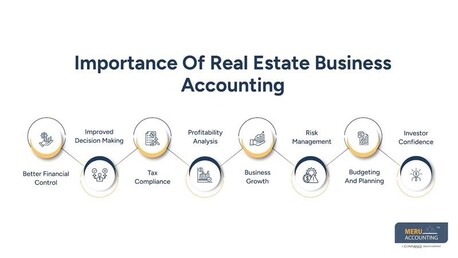
Why Real Estate Business Accounting Is Important
• Better Control: Know exactly where your money goes.
• Smarter Decisions: Use clear data to plan investments.
• Tax Compliance: Avoid penalties with accurate records.
• Profit Tracking: Identify which properties perform best.
• Business Growth: Plan expansion with confidence.
Common Methods Used
• Cash Basis: Record transactions when money moves.
• Accrual Method: Record when transactions happen.
• Property-Based Tracking: Manage each property separately.
Common Challenges
• Managing multiple properties
• Missing small expenses
• Handling changing tax rules
• Keeping records consistent
• Dealing with uneven cash flow
Best Practices
• Use accounting software to reduce manual work
• Keep personal and business finances separate
• Update records regularly
• Review reports often
• Plan ahead for taxes
Getting Started
• Understand your business needs
• Choose suitable software
• Set up clear categories for income and expenses
• Hire experts or train your team
• Review and improve your process regularly
Final Thoughts
Real estate business accounting gives you a clear view of your finances, helps you avoid costly mistakes, and supports long-term success. With the right system in place, you can manage properties more efficiently and focus on growing your business.
Meru Accounting has a team of skilled industry professionals. We understand all real estate business accounting requirements thoroughly.
FOR MORE INFO : https://www.meruaccounting. ...