Without clear records, businesses may face cash flow issues, reporting errors, and missed growth opportunities. That’s why ecommerce business accounting plays a key role in keeping your business organized and financially healthy.
What Is Ecommerce Business Accounting?
Ecommerce business accounting involves recording all financial activities related to online sales. This includes tracking orders, refunds, shipping costs, and platform fees.
Since sales often come from different channels like websites or marketplaces, it’s important to capture all data correctly. It also includes matching payment gateway records with bank deposits and tracking expenses like ads, packaging, and delivery.
Why It Matters for Your Business
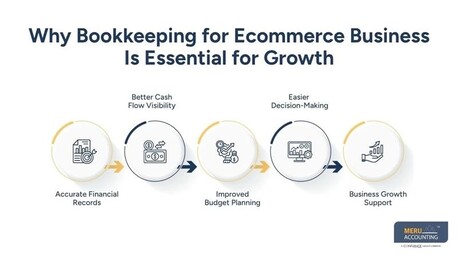
• Accurate records: Keeps all transactions clear and error-free
• Better cash flow control: Helps you know how much money is coming in and going out
• Smarter budgeting: Lets you plan spending based on real data
• Improved decisions: Clear reports support better business choices
• Supports growth: Helps identify profitable areas and reduce risks
How It Differs from Traditional Accounting
• High transaction volume: Many small daily sales to track
• Multiple sales channels: Data comes from different platforms
• Frequent returns: Refunds must be recorded properly
• Inventory movement: Stock levels change constantly
• Payment delays: Gateways may delay payouts, affecting cash tracking
Key Parts of Ecommerce Business Accounting
• Sales tracking: Record all orders from every platform
• Expense tracking: Monitor costs to control spending
• Bank matching: Ensure records match actual deposits
• Inventory tracking: Keep stock levels accurate
• Tax handling: Calculate and file taxes correctly
Managing Cash Flow Effectively
• Track cash flow regularly
• Control unnecessary expenses
• Plan for seasonal sales changes
• Keep emergency funds ready
• Review financial reports to spot trends
Why Inventory Management Is Important
• Avoid excess stock and tied-up cash
• Prevent running out of products
• Improve order processing
• Reduce losses and errors
• Ensure accurate financial reports
Common Challenges
• Managing multiple platforms
• Handling returns and refunds
• Dealing with payment delays
• Keeping inventory accurate
• Relying too much on manual work
Best Practices to Follow
• Use accounting software to automate tasks
• Update records regularly
• Keep business and personal finances separate
• Check and match accounts often
• Work with professionals for better accuracy
Key Takeaways
• Ecommerce business accounting is vital for tracking finances and growth
• It helps manage sales, expenses, inventory, and taxes
• Proper accounting improves cash flow and decision-making
• Following simple best practices keeps records accurate and reliable
In short, ecommerce business accounting helps you stay in control of your finances, avoid mistakes, and grow your online business with confidence.
Meru Accounting provides specialized ecommerce business accounting services tailored to online sellers. Our solutions are designed to meet the unique financial needs of ecommerce businesses.
FOR MORE INFO : https://www.meruaccounting. ...