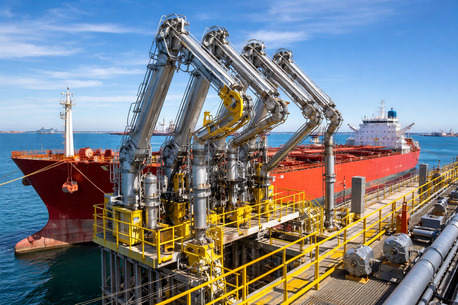
Marine terminals handling bulk liquids and gases rely heavily on precision, safety, and reliability. One of the most critical systems enabling these operations is the marine loading arm. Proper installation of these systems is not just a technical requirement—it directly impacts operational safety, environmental protection, and long-term performance.
As global standards continue to evolve, terminals are placing greater emphasis on installation quality to ensure consistent and risk-free transfer operations.
Understanding Marine Loading Arm Systems
Marine loading arms are engineered mechanical systems used to transfer fluids between shore facilities and vessels such as tankers and barges. Compared to flexible hoses, these systems offer:
Greater structural stability
Controlled movement during vessel motion
Reduced risk of leakage or rupture
Improved operator safety
However, achieving these benefits depends heavily on how well the system is installed and integrated into the terminal infrastructure.
Why Proper Installation Is Critical
In real-world terminal conditions, vessels are constantly affected by tides, wind, and loading conditions. Even small installation inaccuracies can lead to:
Misalignment during connection
Increased stress on swivel joints
Reduced operational range
Higher maintenance frequency
A correctly installed system ensures:
Smooth and safe product transfer
Minimal product loss and environmental risk
Balanced arm movement and longer equipment life
Easier inspection and maintenance access
Simply put, installation quality determines whether the system performs efficiently or becomes a long-term operational challenge.
Key Stages in Installation
1. Site Assessment and Engineering Validation
Every successful project begins with a detailed evaluation of the installation site. This includes:
Structural integrity of the jetty or berth
Vessel size range and movement patterns
Tidal variations and environmental conditions
Pipeline routing and pressure requirements
This phase ensures the system design matches real operating conditions, avoiding costly modifications later.
2. Foundation and Structural Preparation
Marine loading arms exert both static and dynamic loads. A structurally sound foundation ensures:
Support equipment weight
Absorb operational stresses
Maintain alignment over time
Older terminals may require reinforcement or redesign before installation can proceed safely.
3. Mechanical Assembly and Positioning
At this stage, components are assembled and positioned using heavy lifting equipment. Precision is critical:
All parts must be verified against technical drawings
Ensure that flange surfaces are free from debris and positioned correctly to avoid sealing issues
Installation should be carried out in accordance with the manufacturer’s recommended procedures.
Accurate positioning ensures smooth articulation and prevents unnecessary stress during operation.
4. Hydraulic, Electrical, and Control Integration
Modern systems are rarely standalone mechanical units. They are integrated with:
Hydraulic power units for controlled movement
Electrical systems for monitoring and safety
Instrumentation for position tracking and alarms
Proper integration improves responsiveness, enhances operator control, and reduces operational risk.
5. Testing and Commissioning
Before the system becomes operational, it undergoes rigorous testing, including:
The system should be thoroughly tested to confirm smooth movement and full operational reach
Swivel joint performance checks
Adjustments should be made to ensure smooth and controlled movement of the loading arm.
All safety mechanisms should be thoroughly tested to confirm proper functionality
Final calibration ensures the system performs reliably under actual working conditions.
Common Challenges in Marine Loading Arm Installation:
Harsh Marine Environment
Salt air, humidity, and wind exposure can affect both installation and long-term durability.
Structural Constraints
Existing infrastructure may not meet modern load or alignment requirements.
Precision Requirements
Minor errors in alignment can significantly impact performance and safety.
Multi-Stakeholder Coordination
Projects often involve multiple parties, including contractors, OEMs, and terminal operators, making coordination essential.
Industry Perspective
In the industrial contracting space, companies like Tekzone are involved in delivering integrated solutions for marine loading systems. Their scope typically includes:
Design and equipment sourcing
Structural and foundation work
System integration
Commissioning and maintenance support
Such integrated approaches are particularly valuable in complex oil and gas or petrochemical terminal environments.
Best Practices for Successful Installation
To achieve optimal results, operators and project teams should:
Conduct detailed site and vessel compatibility studies
Follow manufacturer specifications strictly
Use experienced installation and lifting teams
Ensure proper grounding and safety protocols
Verify structural readiness before installation
Perform complete system integration checks
Document commissioning and testing procedures
Plan maintenance strategies early
These steps significantly reduce operational risks and improve long-term reliability.
In practice, many performance issues arise not during installation, but during the first few weeks of operation when real loading conditions expose minor alignment gaps.
Conclusion
Marine loading arm installation is far more than a mechanical setup process—it is a critical engineering activity that directly influences terminal safety, efficiency, and durability. A well-executed installation ensures reliable fluid transfer, minimizes environmental risks, and supports smooth day-to-day operations.
As terminals continue to modernize, the focus on precision installation, system integration, and lifecycle performance will only increase. Investing in the right approach from the beginning ultimately protects both assets and operations over the long term.
FAQs
Q1. What does marine loading arm installation involve?
It involves a series of stages, including site evaluation, foundation preparation, equipment assembly, system integration, performance testing, and final commissioning.
Q2. Why is installation accuracy important?
Accurate installation ensures proper alignment, safe operation, and reduced wear on critical components.
Q3. Which industries use these systems?
They are widely used in oil and gas, LNG, petrochemical, and chemical processing terminals.
Q4. What are the main safety considerations?
Key factors include proper grounding, use of protective equipment, controlled lifting operations, and a safe distance from moving parts.
Q5. How long does installation take?
The timeline varies depending on project size, site conditions, and system complexity.