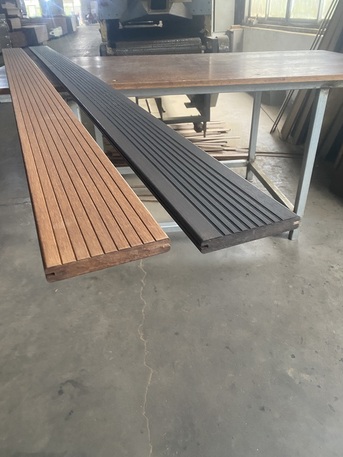
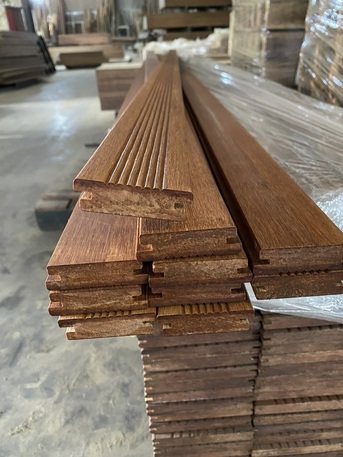
https://www.bambooindustry. ...
For anyone planning a home renovation or a new build, the deck is no longer just a wooden platform in the backyard; it is an architectural extension of the living room. However, it is also the most abused part of a home. Unlike interior flooring, a deck must survive a 24-hour cycle of UV radiation, fluctuating humidity, rain, snow, and the physical wear of foot traffic and furniture.
As we move through 2026, the definition of durability has shifted. It is no longer just about which wood takes the longest to rot. True durability now encompasses dimensional stability, fire resistance, color retention, and the ability to withstand extreme weather events. If you are looking for a material that will still be structurally sound and aesthetically pleasing in twenty-five years, you need to look at the technical data behind the industry’s top performers.
The Evolution of Durability: Wood vs. Engineering
To find the most durable material, we have to categorize the market into three distinct engineering philosophies: Natural Hardwoods, Capped Composites/PVC, and High-Density Bio-Composites (Bamboo). Each has a specific "failure point," and understanding these weaknesses is the secret to choosing a long-term winner.
1. Tropical Hardwoods: The Heavyweight Champions
Natural hardwoods like Ipe, Cumaru, and Merbau have been the standard for durability for decades. These timbers are grown in harsh tropical environments, which forces them to develop high densities and natural oils that repel insects and fungi.
Mechanical Strength: Ipe is so dense that it carries a Class A fire rating and is often referred to as "ironwood." It is virtually impossible to dent or scratch.
The Durability Gap: While these woods can last 40+ years, they are not "stable." Because they are organic, they still breathe. In a dry climate, Ipe can develop surface checks (tiny cracks). In a wet climate, if not properly ventilated, it can cup. Furthermore, the ethical sourcing of tropical hardwoods is becoming increasingly difficult, making them a high-cost, high-scrutiny choice in 2026.
2. Capped Composites and Cellular PVC: The Synthetic Solution
Composite decking (a mix of wood fibers and plastic) and PVC (100% plastic) were designed to solve the rot problem of wood. In 2026, "capped" technology—where the core is wrapped in a protective polymer shell—has reached a peak.
Moisture Resistance: PVC is the undisputed king of moisture. If you are building a dock or a deck around a saltwater pool, PVC will outlast almost anything because it contains zero organic material for mold to eat.
The Durability Gap: The weakness of synthetics is heat and expansion. Plastic moves significantly as it heats up. Over twenty years, this constant "thermal shuffling" can put immense strain on fasteners. Additionally, once a composite board is deeply scratched, it cannot be sanded or refinished. It is a "one-life" product.
3. High-Density Strand-Woven Bamboo: The Modern Powerhouse
The standout performer of the last few years has been Strand-Woven Bamboo. This is a bio-composite that takes the strength of natural fiber and stabilizes it with modern resin technology.
The Engineering: Bamboo is shredded, carbonized to remove sugars, and then compressed under hydraulic pressure so intense that it turns the grass strands into a solid, ultra-dense plank.
Performance: Bamboo hits a "sweet spot" of durability. It has the hardness of Ipe (Janka rating of 3,500+ lbf) but the dimensional stability of a composite. Because it is pre-shrunk and resin-infused, it moves less than tropical hardwood, making it one of the most structurally reliable materials on the market.
Key Metric: Dimensional Stability
If you ask a contractor what actually "kills" a deck, they won't say rot—they will say movement. When a board expands and contracts too much, it pulls at the screws, widens the gaps, and eventually warps.
In 2026, the most durable material is the one with the lowest expansion coefficient.
Wood moves significantly across its width.
PVC moves significantly across its length.
High-Density Bamboo and Mineral-Based Composites (MBC) show the least movement in all directions.
This stability is why hidden fastener systems have become the professional standard. A stable board allows for a seamless, "indoor-floor" look that doesn't turn into a trip hazard after three seasons of sun exposure.
The "Hidden" Durability Factor: The Substructure
It is a common mistake to spend $20,000 on premium boards and install them over a $2,000 pressure-treated pine frame. In many cases, the "durability" of a deck is limited by its skeleton.
To ensure your deck lasts thirty years, the industry has moved toward two specific upgrades:
Joist Flashing Tape: A simple butyl tape applied to the tops of wooden joists. This prevents water from seeping into screw holes, which is where 90% of frame rot begins.
Steel Framing: For those seeking the absolute peak of durability, light-gauge steel joists are the 2026 standard. A steel frame will never warp, rot, or twist, ensuring that the expensive decking on top stays perfectly flat for its entire lifespan.
Fire Resistance: A New Priority
With the increase in Wildland-Urban Interface (WUI) building codes, fire resistance is now a primary metric of durability. A deck that survives a fire is the ultimate durable asset.
Both Ipe and High-Density Bamboo naturally carry Class A fire ratings. This means they do not easily ignite and they char slowly, protecting the structural integrity of the home. Many plastic-based composites have improved, but they still struggle to match the natural fire-retardant properties of ultra-dense organic fibers. If you live in a fire-prone region, the "most durable" material is defined by its ASTM E84 flame spread index.