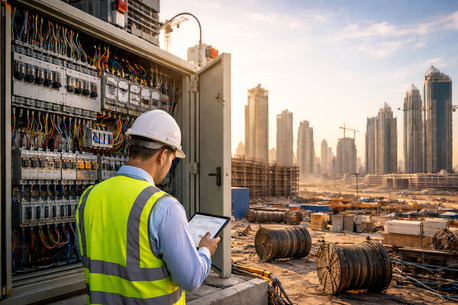
Dubai’s construction and industrial sectors operate under tight timelines, high technical expectations, and strict regulatory oversight. In this environment, electrical contracting is not just a support activity—it directly influences project approvals, commissioning timelines, and long-term operational reliability.
From high-rise developments to process-driven industrial facilities, electrical contractors are expected to deliver integrated solutions that go far beyond installation. Their role includes system design coordination, regulatory compliance, equipment integration, and performance validation during commissioning.
Why Electrical Contracting Plays a Critical Role in Dubai
The scope of electrical work in Dubai has evolved significantly, driven by increasingly complex projects and higher performance expectations. Contractors are now involved in:
Design and balancing of low- and medium-voltage distribution systems
Integration of field instrumentation with control platforms
Support for automation systems in industrial environments
Switchgear installation and panel configuration
Testing, commissioning, and lifecycle performance optimization
In practice, electrical systems must function as part of a larger ecosystem that includes mechanical, civil, and automation components. This is particularly important in fast-track developments, where multiple disciplines operate simultaneously, and coordination gaps can lead to costly delays.
For example, in many Dubai projects, electrical installation begins before civil works are fully complete, requiring continuous adjustment of routing, load planning, and site execution strategies.
Compliance and Regulatory Expectations
A defining characteristic of electrical contracting in Dubai is its regulatory framework. Authorities such as the Dubai Electricity and Water Authority enforce detailed technical standards that govern every stage of electrical work—from design approval to final inspection.
Key compliance areas include:
Low-voltage and medium-voltage network design
Metering systems and approval processes
Substation design and integration requirements
Earthing, grounding, and safety protections
Inspection, testing, and commissioning procedures
In real-world scenarios, compliance is often one of the most critical factors affecting project timelines. Delays in approvals or inspection failures can halt progress entirely. As a result, contractors must combine technical capability with strong documentation practices and a clear understanding of regulatory expectations.
Core Services in Electrical Contracting
The services provided by electrical contractors vary based on project type, but typically include:
Commercial and Residential Projects
Electrical layout planning and internal wiring
Energy-efficient lighting system installation
Distribution board setup and load configuration
Testing, inspection, and final commissioning
Industrial and Infrastructure Projects
Plant electrification and heavy-duty cable installation
Instrumentation and control system wiring
Equipment installation and system integration
Execution of shutdown-based upgrades and modifications
In complex industrial environments, electrical contractors often work alongside mechanical and civil teams to deliver integrated solutions. This multidisciplinary coordination is essential in facilities where electrical performance directly affects production output and system reliability.
What Sets a Reliable Contractor Apart
Selecting a contractor in Dubai requires careful evaluation beyond basic capabilities. The following factors are critical:
1. Sector-Specific Experience
Industrial projects require a different approach compared to commercial fit-outs, particularly in terms of safety, sequencing, and system integration.
2. Execution Under Real Constraints
Experienced contractors are accustomed to working under tight deadlines, limited access windows, and live operational environments.
3. Regulatory Familiarity
Understanding approval processes and inspection requirements is essential to avoid costly delays.
4. Scalable Execution Capability
The ability to deploy skilled manpower, engineering support, and safety systems at scale is crucial for large or fast-track projects.
In practice, many project delays are not caused by technical limitations, but by poor coordination between disciplines—something experienced contractors are better equipped to manage.
A Closer Look at Tekzone’s Position in the Market
The growing complexity of projects in Dubai has increased demand for contractors capable of delivering integrated, multi-disciplinary solutions. Companies like Tekzone reflect this shift toward broader execution capability.
Based on its published profile, the company operates across electrical and instrumentation, mechanical systems, industrial automation, and civil construction. This allows it to support projects where coordination between disciplines is critical.
Its project portfolio includes work associated with major regional and international entities such as DEWA, SEWA, Emirates Steel, ADNOC-related operations, and global brands like Unilever and IFFCO. These projects range from factory construction and relocation to shutdown execution, process system integration, and infrastructure upgrades.
This level of cross-sector exposure is particularly relevant in industrial environments, where contractors must handle complex requirements within constrained timelines.
Electrical Contracting in Industrial Environments
Industrial projects present a different level of complexity compared to standard building installations. They typically involve:
Integration with process systems and production workflows
Coordination with automation platforms such as PLC and SCADA systems
Execution during planned shutdowns with minimal downtime
Strict adherence to safety-critical systems and procedures
In many cases, contractors operate within active facilities, where even minor disruptions can impact production. Shutdown windows are often limited, sometimes to less than two weeks, requiring precise planning and continuous execution.
Contractors with experience in plant upgrades, relocations, and process environments are better positioned to manage these challenges effectively.
Long-Term Value of Choosing the Right Contractor
The impact of a capable electrical contractor extends beyond project completion. High-quality execution contributes to:
Lower maintenance requirements and reduced lifecycle costs
Improved system stability and operational safety
Fewer compliance-related issues after handover
Greater flexibility for future expansion or upgrades
In Dubai’s high-performance environment, these factors directly influence the long-term success and efficiency of a facility.
Conclusion
Electrical contracting in Dubai is defined by technical complexity, fast-paced execution, and strict regulatory requirements. Contractors play a central role not only in installation, but in ensuring systems are compliant, integrated, and ready for operation.
For businesses and developers, selecting the right contractor is a strategic decision. Experience in handling real