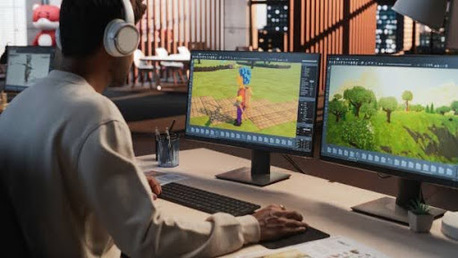
A key focus of a game art course is understanding aesthetics—how color, lighting, composition, and style influence the player’s perception. For example, warm colors and soft lighting can create a sense of comfort, while darker tones and sharp contrasts may evoke tension or mystery. By mastering these elements, students can craft immersive worlds that feel alive and meaningful.
Another important aspect covered in a game art course is character and environment design. Characters are not just visually appealing figures; they tell stories through their appearance, clothing, and expressions. Similarly, environments can reveal history, culture, and mood without a single word. A broken bridge, abandoned buildings, or vibrant landscapes all contribute to storytelling in subtle but powerful ways.
At gamer2maker, the approach to teaching visual storytelling goes beyond theory. The game art course encourages hands-on practice, helping learners experiment with different art styles and techniques. Students are guided to think creatively, solve design challenges, and develop their own artistic voice. This practical learning experience builds confidence and prepares them for real-world game development.
Moreover, the game art course at gamer2maker emphasizes industry-relevant skills. Students explore modern tools, workflows, and trends used by professional game artists. This ensures they are not only creative but also technically equipped to bring their ideas to life in a professional setting.
If you are passionate about games and want to turn your creativity into a valuable skill, joining a game art course with gamer2maker is a great step forward. It’s an opportunity to learn, create, and grow in an exciting field where imagination meets technology. Start your journey today and transform your passion for gaming into the art of storytelling.