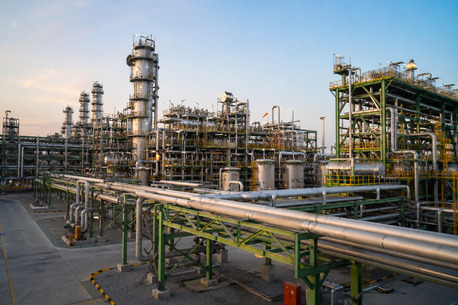
The United Arab Emirates continues to strengthen its position as a regional powerhouse for manufacturing, energy, and logistics. This shift is driving sustained demand for specialized industrial contractors capable of delivering complex, large-scale projects.
Modern industrial construction goes far beyond traditional building work. Today’s projects involve integrated solutions across oil and gas facilities, food processing plants, utilities, heavy engineering, and automated production systems. Delivering such projects requires deep expertise in Engineering, Procurement, and Construction (EPC), along with strong capabilities in mechanical, electrical, civil, and instrumentation disciplines.
A key driver behind this growth is the government’s Operation 300bn initiative, which aims to significantly increase the industrial sector’s contribution to the national economy. This long-term vision is creating continuous opportunities for contractors involved in building, upgrading, and maintaining industrial infrastructure.
The UAE aims to increase the industrial sector’s contribution to AED 300 billion by 2031 under Operation 300bn.
Why Industrial Contractors Play a Critical Role
Industrial projects operate in environments where precision, safety, and uptime are non-negotiable. Unlike general construction firms, EPC contractors must work within live operational settings where even minor disruptions can have significant financial and operational consequences.
Whether it’s refinery upgrades, pipeline installations, or factory expansions, contractors are expected to coordinate engineering, procurement, and execution seamlessly. This is especially critical in sectors such as petrochemicals, pharmaceuticals, and energy.
Leading contractors distinguish themselves by offering integrated capabilities, including:
Mechanical erection and equipment installation
Electrical and instrumentation systems
Process piping and automation
Maintenance and shutdown support
Firms experienced in both greenfield and brownfield environments are particularly valuable, as many UAE projects involve expansion or modification of existing facilities.
Industrial Construction in Dubai
Dubai remains a key commercial and industrial hub, attracting businesses that require advanced infrastructure and fast-track project delivery. Companies operating here typically look for contractors who combine technical depth with speed, regulatory awareness, and logistical efficiency.
Projects often require coordination across multiple stakeholders, making multidisciplinary expertise a major advantage. Contractors who can manage design coordination, approvals, installation, commissioning, and facility upgrades under one umbrella tend to stand out in this competitive market.
Industrial Construction Across the UAE
While Dubai is a major center, industrial activity spans across Abu Dhabi, Sharjah, and specialized zones like Ruwais. These regions support a wide range of sectors, including refining, chemicals, utilities, food manufacturing, and heavy process industries.
As competition increases, businesses are becoming more selective. Contractors are evaluated not just on cost, but on their ability to manage industrial risks, execute shutdowns efficiently, and deliver complex EPC projects with precision.
Capabilities that are particularly valued include:
Process piping and structural systems
Electrical and instrumentation integration
Industrial automation
Plant relocation and modernization
Experience in high-regulation industries such as oil & gas, chemicals, and food-grade systems often plays a decisive role in contractor selection.
Why Ruwais Is Strategically Important
Al Ruwais Industrial City has emerged as one of the UAE’s most significant industrial hubs. Strategically located, it connects major global markets across the Middle East, Asia, and Africa.
The region hosts major players such as:
ADNOC
Borouge
The Ruwais Refinery is among the largest in the world, with a processing capacity exceeding 900,000 barrels per day. Ongoing expansions and energy transition projects—including developments in cleaner fuel and LNG—continue to elevate the region’s importance.
For contractors, this means working in highly demanding environments where safety standards, technical expertise, and execution speed are critical.
Construction and Contracting in Ruwais
Contracting in Ruwais differs significantly from conventional construction. Projects are deeply tied to process industries such as refining, petrochemicals, and utilities, where operational continuity is essential.
Clients in this region prioritize:
Proven safety performance (HSE compliance)
Shutdown and turnaround experience
Expertise in live plant environments
Advanced mechanical and electrical execution
Beyond civil work, contractors are often expected to handle specialized scopes, including piping networks, steel structures, equipment installation, instrumentation systems, and rapid maintenance during shutdowns.
In this environment, technical capability carries as much weight as construction capacity.
For instance, a refinery shutdown project may require round-the-clock execution within a limited window to minimize production loss.
A Notable Industry Participant: Tekzone
Tekzone is one of the companies operating in this space across Dubai, Abu Dhabi, and Ruwais. The firm’s scope spans industrial construction, mechanical works, electrical and instrumentation services, and automation.
Its project portfolio reflects involvement in a wide range of industrial activities, including:
EPC project execution
Plant shutdowns and maintenance
Process piping systems
Factory relocation and upgrades
Fuel and utility infrastructure
Conveyor and material handling systems
The company’s relevance lies in its integrated approach—combining construction with engineering and automation capabilities. In markets like the UAE, where projects often demand multidisciplinary execution, such an approach is increasingly valued.
What Businesses Should Look for in an Industrial Contractor
Selecting the right contractor requires more than comparing costs. Industrial projects demand alignment between the contractor’s capabilities and the project’s technical requirements.
Key factors to evaluate include:
Technical specialization: Does the contractor have expertise in your specific industry?
Project experience: Have they handled similar complexity and scale?
Safety standards: Strong HSE performance is essential
Execution capability: Ability to deliver within tight timelines
Shutdown expertise: Critical for high-risk, time-sensitive projects
In regions like Ruwais, experience in brownfield projects and fast-track execution can significantly impact project success.
Conclusion
The UAE’s industrial expansion continues to create strong demand for specialized contractors capable of delivering complex, high-value projects. From Dubai’s fast-paced infrastructure environment to the highly technical landscape of Ruwais, businesses must prioritize expertise, safety, and execution capability when selecting partners.
Ruwais, in part