For families relocating to Dubai—or those already settled—choosing the right school is one of the most important long-term decisions. With dozens of Indian curriculum schools across the city, finding the right fit requires more than just comparing fees or exam results.
This guide breaks down everything parents need to know about Indian schools in Dubai, from curriculum and KHDA ratings to teaching quality, facilities, and real-world decision factors—so you can confidently choose a school that aligns with your child’s future.
For instance, a family relocating from Kerala mid-academic year may prioritize CBSE continuity, quick admission availability, and a school within a manageable daily commute.
Why Indian Schools in Dubai Continue to Grow in Demand
Dubai is home to one of the largest Indian expatriate populations in the world, and this has led to a strong, well-developed network of CBSE schools.
Institutions affiliated with the Central Board of Secondary Education (CBSE) are especially popular due to their structured curriculum, global recognition, and smooth transition for students moving between the UAE and India.
Parents typically choose Indian schools in Dubai for three key reasons:
Curriculum continuity for students relocating between countries
Academic rigor with a focus on science, mathematics, and languages
Balanced affordability compared to many international curricula
In addition, the Knowledge and Human Development Authority (KHDA) ensures consistent quality standards across private schools, giving parents a reliable benchmark when comparing options.
What Defines the “Best” Indian School in Dubai?
There is no universal answer to this question—and that’s where many parents go wrong.
The “best” school depends on your child’s:
Learning style
Academic goals
Personality and interests
Commute and daily routine
That said, top-performing Indian schools tend to consistently deliver across several key areas:
1. Strong Academic Foundation (CBSE Excellence)
High-quality CBSE schools go beyond textbooks. They incorporate:
Concept-based learning
Application-focused teaching
Exam readiness without rote memorization
2. KHDA Ratings and Inspection Reports
The Knowledge and Human Development Authority inspects schools annually, rating them from ‘Weak’ to ‘Outstanding.’ For parents, a consistent ‘Good’ rating or above often indicates stable teaching quality, while sudden drops may signal concerns.
These inspections evaluate:
Teaching quality
Student achievement
Leadership effectiveness
Well-being and safety
Schools rated “Good,” “Very Good,” or “Outstanding” typically demonstrate consistent performance.
3. Teaching Quality and Student Progress
Experienced teachers, low student-teacher ratios, and continuous assessment systems are critical indicators of a school’s effectiveness.
4. Technology and Future-Ready Learning
Modern classrooms now include:
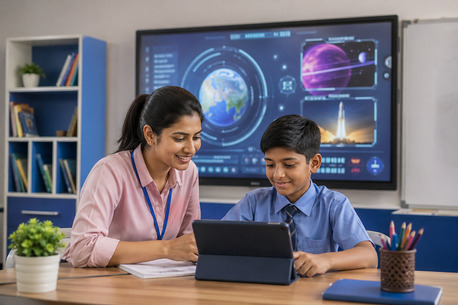
Digital boards and e-learning platforms
STEAM-based education (Science, Technology, Engineering, Arts, Math)
Coding, robotics, and innovation labs
5. Student Well-being and School Culture
The best schools actively support:
Emotional development
Confidence building
Communication skills
Inclusivity and safety
6. Facilities and Co-Curricular Opportunities
From sports infrastructure to arts programs, holistic development plays a major role in school selection.
7. Fee Structure vs Value
High fees don’t always guarantee better education. Smart parents evaluate value, not just cost.
CBSE school fees in Dubai typically range from AED 5,000 to AED 25,000 per year, depending on the school’s facilities, KHDA rating, and location. Admissions typically begin between October and January, with many high-demand schools maintaining waiting lists for mid-year entries.
Indian curriculum schools are among the largest segments of Dubai’s private education sector, with tens of thousands of students enrolled across CBSE institutions.
Not every ‘top-rated’ school will be the right fit—and that’s completely normal.
A Closer Look: Sabari International School (SIS Dubai)
Among the growing list of Indian schools in Dubai, Sabari International School stands out as a modern, forward-thinking institution.
SIS Dubai offers an enriched CBSE curriculum combined with international teaching practices, making it a strong option for families seeking both academic strength and holistic development.
What Makes SIS Dubai Notable?
Unlike many traditional CBSE schools that rely heavily on lecture-based instruction, Sabari International School integrates iPad-based learning and project-driven STEAM activities to promote critical thinking and real-world application.
Key highlights include:
STEAM-focused curriculum
Interactive early years learning stations
A holistic approach focused on “head, heart, and hands.”
According to KHDA’s 2023–2024 inspection, SIS Dubai holds a “Good” rating, with strengths in:
Mathematics and science outcomes
Student well-being and safety
Parent engagement
This combination of academic structure and modern pedagogy positions SIS Dubai as a compelling choice for many families.
How to Compare Indian Schools in Dubai (A Practical Approach)
Rather than relying on rankings alone, use this step-by-step method:
1. Go Beyond “CBSE” Labels
Not all CBSE schools deliver the same quality. Look at:
Teaching style (traditional vs inquiry-based)
Classroom engagement
Innovation in learning
2. Study KHDA Reports Carefully
Instead of just checking ratings, read:
Strengths and weaknesses
Trends over the years
Comments on student progress
3. Visit the Campus in Person
A school visit reveals what brochures cannot:
Classroom atmosphere
Student behavior
Teacher interaction
Cleanliness and safety
4. Evaluate Commute and Location
In Dubai, where school buses often follow long multi-stop routes, students in areas like Al Nahda or Mirdif may spend 45–60 minutes commuting each way—making school proximity a key factor for younger children.
Energy levels
Academic performance
Overall well-being
5. Ask the Right Questions
During school visits, ask about:
Homework load
Assessment methods
Student support systems
Communication with parents
Ask how the school supports students who fall behind academically—strong schools will have structured intervention programs rather than informal support.
Key Features Parents Should Look For
Top Indian schools in Dubai typically offer:
A well-structured CBSE curriculum
Qualified and experienced faculty
Strong KHDA ratings
Technology-integrated classrooms
Safe, inclusive learning environments
Opportunities in sports, arts, and innovation
Transparent communication with parents
Clear academic progression to Grade 12
Common Mistakes Parents Should Avoid
Many families m