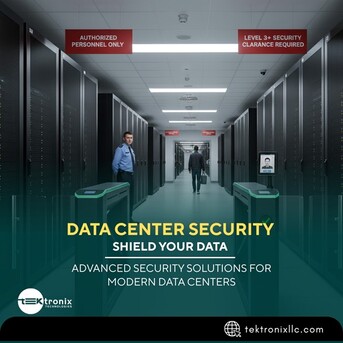
Today's data center gates in Kuwait are evolving into integrated, intelligent security ecosystems. By combining Data Center Security Monitoring, advanced Data Center Firewalls, robust Data Center Encryption, unified Cybersecurity Data Center strategies, and proactive Data Center Threat Detection, Kuwait organizations are building data centers that are digitally defended, regulation-compliant, and future-ready.
Why Kuwait Data Center Security Is a National Priority
Kuwait's data centers now underpin the most critical sectors of the national economy. A breach, outage, or unauthorized intrusion does not merely affect a single organization — it can compromise entire industries. The sectors most dependent on resilient data center security in Kuwait include:
• Government digital services and e-governance platforms serving Kuwait City and nationwide
• Financial institutions, banks, and fintech firms processing high-value transactions daily
• Energy and industrial operations managing Kuwait's oil, gas, and utilities infrastructure
• Healthcare systems and smart city platforms collecting sensitive citizen data
Consequently, Kuwait is making significant investment in sophisticated, multi-layered data center security initiatives that extend far beyond conventional locks, cameras, and perimeter fencing — moving toward intelligent, automated, and integrated zero-trust architectures.
Redefining Kuwait Data Center Gates: From Physical Barriers to Smart Security Ecosystems
Historically, data center gates referred almost exclusively to physical barriers — reinforced doors, man traps, and access point controls. In Kuwait's modern digital landscape, that definition has expanded dramatically. Today's data center gate represents the union of physical and cyber defense — a unified security perimeter that addresses both in-person intrusion and digital attack vectors simultaneously.
The future data center gate in Kuwait is defined by three core characteristics:
• Intelligent and automated — capable of responding to threats without human intervention
• Integrated with layered cyber defense — firewalls, encryption, and intrusion detection working in concert
• Continuously monitored — 24/7 visibility across both physical and digital access points
Data Center Security Monitoring: Real-Time Visibility Across Every Layer
The operational foundation of modern Kuwait data center security is Data Center Security Monitoring. It provides continuous, real-time visibility into both physical and digital environments — ensuring that every access event, network transaction, and anomaly is captured, analyzed, and acted upon instantly.
Key capabilities of a robust Data Center Security Monitoring platform include:
• Continuous monitoring of all physical access events — entries, exits, and failed attempts
• Real-time alerts triggered by anomalies, unusual patterns, or policy violations
• Deep integration with surveillance systems, biometric access control, and network infrastructure
• Centralized dashboards giving security operators a unified operational picture
• Automated audit trails that support compliance reporting under Kuwait's regulatory frameworks
For Kuwait data centers operating around the clock — serving government agencies, financial institutions, and critical infrastructure — security monitoring ensures that no threat goes undetected, and no incident goes unrecorded.
Data Center Firewalls in Kuwait: The First Line of Cyber Defense
As Kuwait's data center gates become increasingly digital, cyber protection is now as critical as physical access control. Data Center Firewalls serve as the primary gateway between secure internal networks and the external threat landscape — filtering malicious traffic, enforcing security policies, and protecting critical applications and sensitive data assets.
The core functions of Data Center Firewalls deployed across Kuwait include:
• Preventing unauthorized network access from external and internal threat actors
• Blocking malicious traffic including DDoS attacks, ransomware payloads, and intrusion attempts
• Enforcing granular security policies across network segments and user roles
• Protecting mission-critical applications and regulated data from exposure
• Supporting network segmentation — a core pillar of zero-trust architecture in modern data centers
In an era of increasingly sophisticated cyber threats targeting GCC infrastructure, next-generation Data Center Firewalls are not optional — they are a foundational requirement for any Kuwait data center security strategy.
Data Center Encryption: Protecting Kuwait's Most Sensitive Data Assets
Even with robust perimeter security, data breaches can occur. Data Center Encryption ensures that even if unauthorized actors gain access to data — whether at rest on storage systems or in transit across networks — that data remains completely unreadable and operationally worthless without the correct decryption credentials.
The business and compliance benefits of Data Center Encryption for Kuwait organizations include:
• Full protection of data at rest — on servers, storage arrays, and backup systems
• End-to-end protection of data in transit — across internal networks and external connections
• Significant reduction in the operational and reputational impact of security breaches
• Support for regulatory compliance under Kuwait's national cybersecurity frameworks and GCC standards
• Strengthened trust with customers, government partners, and international business stakeholders
As Kuwait's data centers handle growing volumes of personally identifiable information, financial records, and government data, encryption is rapidly transitioning from a best practice to a mandatory requirement for data center security compliance.
Cybersecurity Data Center Strategies: A Unified, People-Process-Technology Approach
Effective Cybersecurity Data Center strategy in Kuwait goes beyond deploying individual security tools. It integrates people, processes, and technology into a single, cohesive defensive framework — ensuring that every layer of the data center security architecture works in coordination rather than in isolation.
The core elements of a comprehensive Kuwait Cybersecurity Data Center strategy include:
• Network security — firewalls, intrusion prevention systems, and network segmentation
• Identity and access management — role-based access control and multi-factor authentication
• Data Center Access Control — biometric authentication and smart card systems at physical entry points
• Continuous security monitoring — real