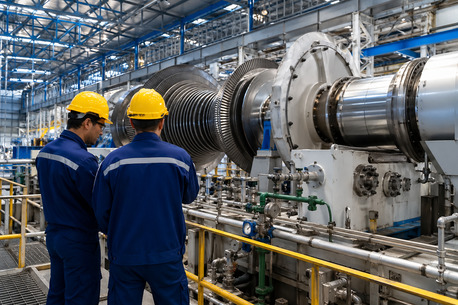
In Dubai’s rapidly evolving industrial ecosystem, equipment installation is still often treated as a final milestone. However, in reality, it is one of the most critical determinants of long-term operational performance.
As industries across the UAE move toward higher levels of automation, efficiency, and reliability, installation today defines how reliably, efficiently, and cost-effectively a plant will operate over its entire lifecycle.
Rethinking Installation: Beyond Placement to Performance
Traditional installation approaches follow a linear path: assess, position, align, and hand over. While this may achieve short-term functionality, it often ignores the complex interactions between machinery, environment, and operational demands.
The consequences typically emerge later:
Premature bearing failures caused by micro-misalignment, leading to repeated shutdowns
Higher energy consumption due to poorly integrated drive systems
Structural stress where foundations fail to absorb operational vibrations
Increased maintenance time and cost due to poor equipment accessibility
Together, these issues accumulate over time, gradually reducing reliability, increasing operating costs, and limiting overall system efficiency.
For example, even a minor misalignment in a compressor system can increase energy consumption while accelerating bearing wear—often resulting in unplanned shutdowns within the first year of operation.
A Lifecycle-First Approach to Installation
A more advanced methodology shifts the focus from immediate functionality to sustained operational excellence. Instead of asking, “Will this system run today?” the better question is, “How will this system perform over the next 15–20 years?”
This lifecycle-first approach integrates engineering foresight, simulation, and data-driven decision-making into every stage of installation.
Pre-Installation Asset Modeling (Digital Twin Integration)
Before equipment reaches the site, virtual models of the plant layout are developed to simulate real-world conditions. This goes beyond basic clash detection.
Advanced simulations evaluate:
Thermal expansion under operating conditions
Structural stress distribution
Dynamic force interactions between interconnected systems
This proactive validation significantly reduces commissioning risks and eliminates performance uncertainties before equipment is physically installed.
Foundation Engineering Designed for Operational Reality
Dubai’s environmental conditions—including soil characteristics and temperature fluctuations—demand more than conventional foundation design.
Modern installation practices emphasize dynamic foundations engineered to:
Absorb and dissipate vibration from heavy machinery
Maintain alignment stability over time
Prevent structural fatigue in connected systems
This is particularly critical for high-load equipment such as compressors, turbines, and production lines, where even minor instability can result in vibration amplification, faster component wear, and unplanned shutdowns.
In many cases, foundation design becomes the silent factor that determines whether equipment performs at optimal levels or experiences recurring mechanical stress.
Precision Alignment with Laser and Thermal Calibration
Accurate alignment is one of the most critical determinants of equipment efficiency and lifespan. While traditional methods rely on basic tools, advanced installation integrates the following:
Laser alignment systems for micron-level precision
Thermal growth modeling to predict expansion during operation
Hot alignment testing to calibrate equipment under real operating temperatures
This directly translates into improved efficiency, reduced operating stress, and lower lifecycle energy consumption.
Integrated IoT and Predictive Health Infrastructure
Installation is also the ideal stage to embed intelligence into equipment systems. By integrating sensors during setup, organizations can move directly from reactive maintenance to predictive operations.
Typical integrations include:
Vibration monitoring sensors
Oil condition analysis systems
Thermal performance tracking
These systems provide continuous insight into equipment health, enabling early fault detection, reducing downtime, and improving maintenance planning accuracy.
From Installation to Measurable Business Impact
When installation is approached strategically, the benefits extend far beyond operational readiness.
Organizations can expect:
Faster ramp-up to full production capacity by minimizing commissioning issues
Reduced risk of unplanned downtime through precision alignment and system integration
Lower long-term maintenance costs due to fewer installation-induced failures
Seamless integration between mechanical systems and digital monitoring platforms
More importantly, these improvements translate into stronger key performance indicators.
Operational and Financial Outcomes
A well-executed installation strategy directly impacts key business metrics:
Operational Efficiency: Systems reach optimal performance faster, avoiding prolonged stabilization periods.
Cost Control: Reducing installation-related faults lowers ongoing maintenance and repair expenses.
Compliance & Risk Management: Detailed documentation supports regulatory compliance and simplifies insurance validation processes.
Integration in an Industry 4.0 Environment
As Dubai’s industrial sector accelerates toward Industry 4.0, installation is evolving from a mechanical activity into a systems integration function. Every asset must be installed not only for mechanical performance, but also for seamless connectivity with digital control ecosystems such as SCADA and MES platforms.
Ensuring Certainty in Complex Projects
Modern industrial projects demand clarity, accountability, and long-term reliability.
A structured installation approach ensures the following outcomes:
Clear ownership across civil, mechanical, and electrical interfaces
Strict safety execution during lifting and confined operations
Accurate as-built documentation with performance baselines for future maintenance and optimization
This ensures that organizations are not only operational at handover but are also equipped for sustained performance management.
Conclusion
In today’s industrial landscape, installation is no longer a procedural step—it is a defining phase of long-term operational success. The decisions made during installation directly influence reliability, efficiency, and lifecycle cost performance for years to come.
Organizations that recognize this shift gain a structural advantage in operational stability and competitiveness.
In high-performance industrial environments, excellence is not achieved at startup—it is engineered from the very beginning.