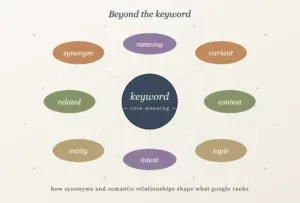
In the ever-changing world of digital marketing, search engine optimization (SEO) continues to be a critical factor for businesses looking to increase their online visibility. Traditionally, SEO relied heavily on targeting specific keywords, repeating them throughout content, and optimizing meta tags. However, as search engines like Google have evolved, they now focus more on understanding user intent and context rather than exact word matches. This shift has brought synonyms and semantic content to the forefront of effective SEO strategies.
Understanding Synonyms in SEO
Synonyms are words or phrases that share similar meanings with your primary keywords. For example, if your main keyword is “online marketing strategies,” synonyms could include “digital marketing tactics,” “internet advertising approaches,” or “web marketing plans.” Incorporating these variations into your content allows search engines to grasp the full context of your page, making it more likely to appear for multiple related queries.
Using synonyms also improves readability. Content that overuses a single keyword can feel repetitive or forced, which may reduce user engagement. By naturally including related terms, your content becomes more dynamic, informative, and appealing to readers.
The Role of Semantic SEO
Semantic SEO focuses on optimizing content to convey meaning and context rather than simply matching keywords. Google’s algorithms analyze how words and phrases relate to one another, considering synonyms, related terms, and user intent. This means that your content can rank for search queries even if it doesn’t include the exact words a user types.
For instance, a search for “eco-friendly home cleaning” may match content that uses terms like “green house cleaning,” “sustainable cleaning solutions,” or “environmentally safe cleaning services.” By leveraging synonyms and related phrases, your content aligns with semantic SEO principles, increasing its relevance and visibility.
Benefits of Using Synonyms in Content
1. Enhanced Relevance
By using synonyms, your content becomes more comprehensive and covers a topic from multiple angles. Search engines recognize this depth and are more likely to rank your page as a valuable resource.
2. Improved User Experience
Natural variation in language makes content easier to read and understand. Readers are more likely to stay on pages that flow smoothly, which can reduce bounce rates and improve engagement—both of which are positive signals for SEO.
3. Broader Keyword Coverage
Synonyms help capture long-tail searches and alternative phrases that users might use. This expands your reach and can attract a wider audience to your website.
4. Reduced Keyword Cannibalization
Using different but related terms across your site prevents multiple pages from competing for the same keyword, allowing each page to perform better individually.
Implementing Synonyms Effectively
To make the most of synonyms in your content:
Conduct thorough research: Identify primary keywords and find relevant synonyms and related terms using keyword tools.
Integrate naturally: Ensure synonyms fit seamlessly into your content without disrupting readability.
Use in key areas: Include synonyms in headings, meta descriptions, and body text to signal context to search engines.
Focus on intent: Prioritize the meaning and relevance of the content to satisfy user queries.
Conclusion
The future of SEO is semantic, and relying solely on exact-match keywords is no longer enough. By strategically using synonyms, businesses can create content that is both user-friendly and search-engine-friendly, improving rankings and attracting more qualified traffic.