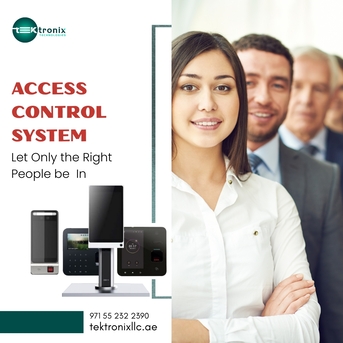
A contemporary Access Control System is an integrated security framework that governs who can enter or exit specific physical locations, at what times, and under what conditions. Unlike traditional lock-and-key mechanisms, today's platforms combine credential verification (cards, biometrics, mobile apps, PINs) with intelligent software to log, audit, and automate access decisions in real time.
Core Components of an Access Control Device Ecosystem
Every deployment is built around a set of hardware and software elements that work in concert:
• Readers and Credentials: Proximity cards, smart cards, fingerprint scanners, facial recognition cameras, and mobile Bluetooth credentials serve as the identity layer.
• Controllers: The brain of the Access Control Device network — controllers process authentication requests and enforce policy rules without relying solely on an internet connection.
• Locking Hardware: Electric strikes, magnetic locks, and motorised bolts secure Door Access Control points and respond instantly to controller decisions.
• Management Software: Cloud or on-premise platforms provide administrators with dashboards for user provisioning, scheduling, reporting, and integration with HR or visitor management systems.
Door Access Control: The Gateway to Smarter Buildings
The Door Access Control layer is the most visible element of any security deployment, but its sophistication goes far deeper than the reader at the entrance. Multi-factor authentication (MFA) at critical entry points — combining a card swipe with a biometric scan, for example — reduces the risk of tailgating and credential sharing to near zero. For UAE businesses that house sensitive intellectual property, financial records, or high-value inventory, this granular control is invaluable.
Modern door controllers also support anti-passback rules, dual-unlock requirements for high-security vaults, and time-zone scheduling that automatically locks an area after hours or during public holidays. Integration with fire alarm systems enables automatic door release in emergencies, satisfying UAE Civil Defence requirements while maintaining everyday security.
Access Control Solutions Designed for the UAE Market
Tektronix LLC engineers each Access Control Solutions deployment around three fundamental pillars: reliability in extreme Gulf climate conditions, compatibility with local regulatory frameworks, and the flexibility to grow with your organisation. Here is how our solution tiers address different business profiles:
Entry-Level: Small Offices and Retail
Standalone readers with PIN or RFID card entry, centralised reporting via a web dashboard, and straightforward installation that minimises disruption to daily operations. Ideal for SMEs entering the UAE free zone ecosystem.
Mid-Tier: Corporate Campuses and Mixed-Use Developments
Networked controllers managing dozens to hundreds of Door Access Control points, integrated visitor management, and mobile credential support. Full audit trails satisfy internal compliance requirements and third-party audits with ease.
Enterprise: Critical Infrastructure and Government Facilities
Redundant server architecture, biometric multi-factor authentication at every perimeter entry, real-time CCTV synchronisation, and API integration with HR, payroll, and incident management platforms. Purpose-built for high-consequence environments where downtime or breach carries significant legal and reputational risk.
Regional Deployments: Access Control System Across the Emirates
Access Control System UAE — A Nationwide Perspective
Across all seven emirates, federal and emirate-level regulations demand that commercial buildings, industrial zones, and public infrastructure implement standardised Security Access Control protocols. Tektronix LLC holds the necessary SIRA approvals and maintains a nationwide service network, ensuring clients from Fujairah to Ras Al Khaimah receive consistent quality and fast on-site support.
Access Control System Dubai — Smart City Integration
Dubai's Smart City initiative places digital security at its core. An Access Control System Dubai deployment must align with SIRA licensing standards and integrate smoothly with Dubai Police reporting portals. Our solutions support real-time event streaming to command centres, enabling enterprises to meet the emirate's stringent physical security requirements while leveraging the city's world-class connectivity infrastructure.
Access Control System Abu Dhabi — Critical Asset Protection
As the UAE capital and home to sovereign wealth institutions, energy facilities, and government ministries, Abu Dhabi demands the highest levels of access governance. An Access Control System Abu Dhabi project typically involves layered perimeter security, government-grade biometrics, and integration with Abu Dhabi's unified security operations platforms. Tektronix LLC's certified engineers bring deep expertise in navigating the specific approval pathways required for high-security deployments in this emirate.
Access Control System Sharjah — Industrial and Free Zone Security
Sharjah's thriving industrial districts and creative free zones present unique challenges: large campuses, shift-based workforces, and diverse tenancy models require flexible credentialing and robust visitor management. Our Access Control System Sharjah deployments leverage scalable cloud management to give facility managers centralised visibility across multiple entry points without the overhead of on-premise server maintenance.
Next-Generation Technologies Shaping Access Control Devices
The next decade will see the Access Control Device evolve from a standalone identifier to an intelligent node within a broader building-management ecosystem. Key technological shifts already reshaping the sector include:
• Mobile Access: Bluetooth Low Energy (BLE) and NFC allow employees to use smartphones as credentials, eliminating the cost and administrative burden of physical card programmes.
• Cloud-Based Management: SaaS platforms enable multi-site administrators to provision, suspend, and audit access rights from any browser, dramatically reducing IT overhead.
• AI-Powered Video Integration: Combining access event logs with AI-analysed video feeds creates automatic anomaly detection — flagging tailgating, loitering, or forced entry in real time.
• Zero-Trust Architecture: Continuous identity verification, rather than a single check at entry, ensures that even authorised users are re-authenticated when accessing sensitive zones deeper within a facility.
• Biometric Multimodal Authentication: Combining fingerprint, iris, and facial recognition reduces false-acceptance rates to near zero, critical for UAE government and financial sector mandates.
Conclusion
The security challenges facing UAE companies in 2024 are more complex, more connected, and more consequential than ever before. Investing in a future-ready Access Control System — one that is intelligent, scalable, and locally compliant — is the most strategic step any organisation can take to protect its people, premises, and productivity. From Door Access Control at the building entrance to biometric authent