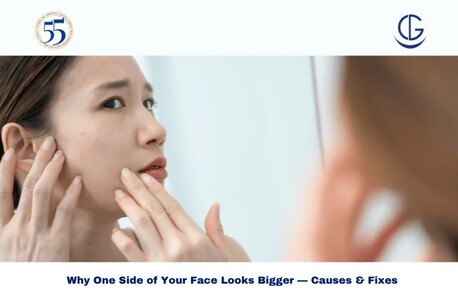
Genetics plays a major role in facial structure development. Some individuals naturally develop stronger muscles or fuller facial contours on one side of the face. Lifestyle habits can also influence facial balance over time. Regularly sleeping on one side, chewing food unevenly, or maintaining poor posture may gradually affect jaw muscles and facial alignment.
Dental and jaw conditions are also associated with facial asymmetry. Misaligned teeth, bite problems, TMJ disorders, and teeth grinding can place uneven stress on facial muscles and joints. In some cases, jaw clenching may enlarge muscles on one side of the face, creating a fuller appearance. Modern dental assessments help identify whether oral health issues are contributing to visible imbalance.
Aging may further affect facial symmetry due to reduced skin elasticity and natural muscle changes. While mild asymmetry is usually harmless, sudden facial swelling or pain should be professionally evaluated to identify possible medical concerns.
Understanding the factors behind facial imbalance can help individuals improve oral care habits and seek professional guidance when necessary. Advances in dental technology and facial analysis continue supporting more accurate evaluations and personalized treatment approaches.