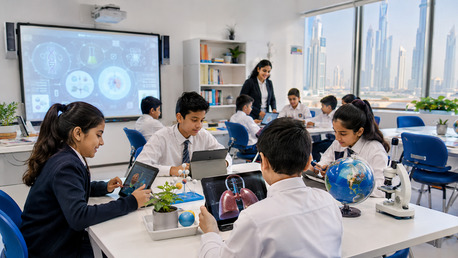
In a city as globally connected and culturally diverse as Dubai, education is evolving far beyond traditional classroom methods. Today’s parents seek schools that combine strong academic foundations with innovation, creativity, and global exposure. This is where CBSE-affiliated schools in Dubai are making a significant impact.
By blending the academic strengths of India’s education system with modern international teaching practices, CBSE schools are creating a learning environment that prepares students for both academic success and future global opportunities. These schools not only maintain high educational standards but also encourage critical thinking, communication, creativity, and cultural understanding.
Regulated by the KHDA, many Indian curriculum schools in Dubai have become preferred choices for families looking to balance academic excellence with cultural values and international exposure.
The Flexibility of CBSE Education in Dubai
The CBSE curriculum is widely recognized for its strong focus on mathematics, science, and language proficiency. However, schools in Dubai have adapted the curriculum to suit the needs of multicultural classrooms, creating a more inclusive and student-friendly learning experience.
Modern CBSE schools in Dubai introduce several innovative approaches, including:
Bilingual Learning Support: English is the primary language of instruction, with Hindi and Arabic integrated to support multilingual development.
Cultural Inclusivity: Students explore Indian heritage alongside UAE history, expanding their cultural perspective.
Personalized Learning Approaches: Teachers modify their lessons to accommodate various learning abilities, ensuring that every student can progress with confidence.
This balanced approach allows students to benefit from the academic discipline of CBSE while developing cultural awareness and adaptability in an international environment.
Project-Based Learning in CBSE Schools
One of the biggest transformations in CBSE education is the growing emphasis on experiential and project-based learning, inspired by India’s NEP 2020 educational reforms.
Rather than relying only on memorization, CBSE schools in Dubai now encourage students to apply concepts through practical activities and collaborative learning.
Common classroom strategies include:
Interdisciplinary Learning: Students connect subjects like science, geography, and environmental studies through practical projects.
Collaborative Inquiry: Group activities help students solve real-world challenges such as climate change, sustainability, and urban development.
Technology-Enabled Learning: Virtual science labs and digital simulations make complex CBSE concepts more interactive and engaging.
For example, students can participate in sustainability projects focused on the UAE's desert ecosystems, allowing them to apply their scientific knowledge to real environmental issues. These experiences enhance their analytical thinking, creativity, and teamwork skills.
Digital Transformation in CBSE Classrooms
Technology is playing an increasingly important role in modern CBSE education across Dubai. Schools are integrating digital tools to create more personalized, engaging, and future-ready learning experiences.
Many institutions now use:
AI-Powered Learning Platforms: Personalized academic support in mathematics and science based on individual student performance.
Virtual Reality Simulations: Interactive lessons for subjects like history, geography, and science.
Data Analytics Systems: Continuous tracking of academic progress aligned with CBSE assessment standards.
These innovations help students strengthen both academic understanding and digital literacy skills, preparing them for a technology-driven future.
Building Global Skills Beyond Academics
CBSE schools in Dubai are not focused solely on examination performance. Equal importance is given to communication, leadership, emotional intelligence, and ethical decision-making.
To support holistic development, schools actively encourage participation in extracurricular and enrichment activities such as:
Debates and Model United Nations (MUN): Improve public speaking, research, and global awareness.
STEM and Robotics Clubs: Encourage innovation, creativity, and problem-solving abilities.
Sports and Wellness Programs: Promote teamwork, discipline, mental well-being, and stress management.
These experiences help students become confident individuals capable of adapting to multicultural academic and professional environments worldwide.
Modern Assessment Methods in CBSE Schools
Assessment methods in Dubai’s CBSE schools are also evolving. Instead of depending entirely on final examinations, schools are increasingly adopting continuous and competency-based evaluation systems.
Popular assessment methods include:
Portfolio Assessments: Collections of student work that demonstrate progress and skill development.
Peer Assessments: Encouraging students to reflect on their own learning and collaborate with classmates.
360-Degree Evaluations: Feedback involving teachers, parents, and students for a more complete understanding of student growth.
This modern approach focuses not only on academic scores but also on practical understanding, creativity, and overall development.
Challenges and Future Opportunities
Despite their success, CBSE schools in Dubai continue to face important challenges, including maintaining academic consistency while adapting to rapidly changing educational trends.
Key focus areas for future growth include:
Training teachers in hybrid and digital learning methods
Expanding access to advanced educational technologies
Strengthening community and parent partnerships
Continuously updating curriculum relevance for global learners
As Dubai continues to position itself as a leading global education hub, CBSE schools are expected to play an even greater role in shaping future-ready students.
Many parents in Dubai now prefer CBSE schools because they combine academic discipline with modern learning environments.
FAQs: CBSE Curriculum Schools in Dubai
Q1. How do CBSE schools in Dubai support students from multicultural backgrounds?
Most CBSE schools in Dubai support multicultural learners through bilingual teaching methods and personalized classroom approaches.
Q2. Why is project-based learning important in CBSE schools?
Project-based learning encourages students to apply theoretical concepts to real-world situations, thereby enhancing their critical thinking and problem-solving skills.
Q3. How is technology integrated into CBSE classrooms?
Schools use AI-powered platforms, virtual reality tools, digital labs, and performance analytics to enhance personalized learning experiences.
Q4. Do CBSE schools prepare students for global careers?
Yes. CBSE schools prioritize academic excellence along with vital skills such as leadership, communication, innovation, and teamwork, which are essential for success in international higher education and careers.
Q5. What types of assessments are commonly used?
Most CBSE schools now combine traditional examinations with portfolio assessments, peer reviews, and continuous performance eva