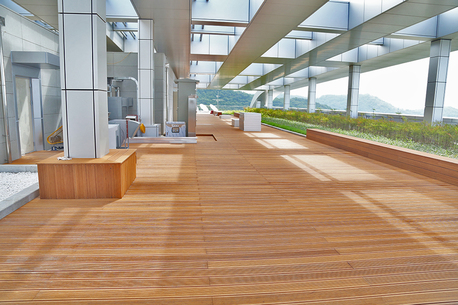
The acoustic quality of a commercial environment is often the invisible factor that determines its success. Whether it is a bustling open-plan office, a high-end restaurant, or a sprawling hotel lobby, the way sound behaves within a space dictates human comfort, productivity, and the overall user experience. Excessive reverberation and noise leakage are more than just distractions; they are physiological stressors that can diminish focus and discourage social interaction. As architects and interior designers seek materials that balance high-end aesthetics with technical performance, Moso bamboo panels have emerged as a premier choice.
Specifically, the Moso panels provided by Bothbest, a leading supplier based in China, offer a unique set of physical properties that make them exceptionally effective for sound management. Unlike synthetic acoustic foam or heavy industrial fabrics, bamboo panels provide a natural, durable, and sophisticated surface that can be engineered to meet specific acoustic requirements. Understanding the science behind these panels is the first step toward creating commercial spaces that sound as good as they look.
The Acoustic Challenge in Modern Architecture
Modern commercial design frequently favors hard, reflective surfaces. Polished concrete floors, expansive glass partitions, and exposed steel ceilings are staples of the contemporary aesthetic. While these materials are visually striking and easy to maintain, they are acoustic nightmares. Sound waves hit these hard surfaces and bounce back into the room, creating a "cocktail party effect" where voices overlap, and clarity is lost.
In an office setting, this leads to a lack of speech privacy and a constant hum of background noise that makes deep work nearly impossible. In the hospitality sector, it can lead to environments where diners have to shout to be heard, detracting from the luxury experience. To counter this, designers must introduce materials that can either absorb sound energy or diffuse it effectively. This is where the density and cellular structure of Moso bamboo come into play.
The Physical Properties of Moso Bamboo for Sound
Moso bamboo, scientifically known as Phyllostachys edulis, is characterized by its incredible fiber density. When processed into architectural panels by Bothbest, the bamboo undergoes a series of treatments—including thermal modification and high-pressure lamination—that further refine its structure.
From an acoustic perspective, bamboo is a fascinating medium. It is naturally porous at a microscopic level, but dense enough to provide significant mass. In the world of acoustics, mass is a primary requirement for sound insulation (blocking sound from moving from one room to another), while surface texture and porosity are keys to sound absorption (preventing echoes within a room). By utilizing different manufacturing techniques, Moso panels can be optimized for both functions.
Sound Absorption vs. Sound Blocking
It is important to distinguish between these two concepts when planning a commercial space.
Sound Absorption: This involves "soaking up" sound waves to prevent them from echoing. For this purpose, Bothbest Moso panels are often perforated or grooved. These openings allow sound waves to pass through the hard bamboo surface and into an acoustic backing material, such as mineral wool or recycled polyester felt. The bamboo acts as a decorative and protective face that lets the sound enter but prevents it from bouncing back.
Sound Blocking (Insulation): This is the ability of a wall or partition to stop sound from traveling through it. Because Moso bamboo is denser than many traditional hardwoods like oak or maple, a solid bamboo panel provides an excellent barrier against sound transmission. This is particularly useful for conference room walls or executive offices where confidentiality is paramount.
Engineering Moso Panels for Acoustic Performance
One of the reasons professional designers specify Bothbest products is the ability to customize the acoustic profile of the panels. A flat, solid bamboo panel will reflect sound, which might be desirable in a concert hall to help project music but is rarely ideal in an office. To turn bamboo into a sound-absorbing tool, specific engineering methods are used.
Perforated Panels
Perforated Moso panels feature a grid of small holes. The diameter and spacing of these holes are calculated to target specific sound frequencies. For example, smaller, more frequent perforations are often better at absorbing high-frequency noises, such as the clatter of keyboards or the shrill ring of a telephone. These panels are frequently used as ceiling clouds or wall cladding in areas where people need to communicate clearly.
Grooved and Slotted Systems
Grooved panels feature linear channels cut into the surface of the bamboo. This creates a rhythmic, modern look while serving a vital acoustic function. The grooves act as a "trap" for sound waves. When sound hits the angled surfaces of the grooves, it is diffused—scattered in different directions—rather than reflected in a single, coherent wave. This diffusion helps to maintain a "live" feel in a room without the harshness of a direct echo.
"The goal of acoustic design is not always to create total silence, but to create a 'balanced' environment where speech is intelligible and background noise is unobtrusive."
Implementation in the Office Environment
In the post-pandemic era, the office has become a destination for collaboration. However, collaboration is noisy. The challenge for 2026 and beyond is creating "zones" within an open-plan office.
By using Bothbest Moso panels as room dividers or acoustic wall treatments, companies can create quiet zones without building permanent, claustrophobic walls. Bamboo panels can be used to create semi-private pods or phone booths. Because the material is warm and natural, it helps to soften the often-sterile feel of corporate environments, contributing to employee well-being while simultaneously solving the noise problem.
Productivity and the "Acoustic Comfort"
Research has consistently shown that noise is the number one complaint of office workers. Poor acoustics can lead to a significant drop in cognitive performance. By integrating Moso panels into the ceiling architecture, designers can achieve a high Noise Reduction Coefficient (NRC). An NRC rating of 0.70 or higher means that the surface is absorbing 70% of the sound that hits it. Moso panels, when paired with the right acoustic backing, easily reach these professional benchmarks.
Hospitality and Retail: The Atmosphere Factor
In restaurants and hotels, the soundscape is just as important as the lighting or the furniture. A restaurant that is too quiet feels stagnant, but one that is too loud feels chaotic. Moso panels allow for "acoustic tuning."
For instance, a restaurant might use solid Moso panels on the lower half of the walls for durability against chairs and foot traffic, while using perforated Moso panels on the upper walls or ceiling to catch the rising noise of conversation. This ensures that guests can h