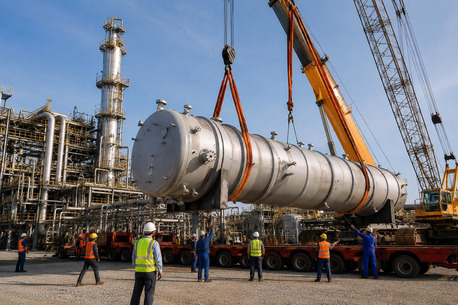
With industrial projects increasing in size and complexity, the role of heavy equipment installation contractors has never been more important. Whether it’s a manufacturing plant, refinery, logistics center, power plant, or processing unit, the installation of large industrial machinery is a critical step that directly impacts operational efficiency, safety, and long-term reliability.
Unlike standard construction work, heavy equipment installation requires detailed coordination, technical precision, and careful execution. A single mistake in alignment, lifting, or foundation preparation can lead to equipment failure, production delays, or unexpected maintenance costs later on. For this reason, experienced installation contractors are often viewed as essential project partners rather than just subcontractors.
Modern industrial projects operate under strict timelines, especially in sectors such as oil and gas, petrochemicals, and manufacturing, where downtime can result in significant financial losses. This is why companies increasingly rely on specialized contractors who understand not only machinery installation but also plant operations, shutdown planning, safety compliance, and multidisciplinary coordination.
What Heavy Equipment Installation Contractors Actually Do
Heavy equipment installation contractors are responsible for managing the safe movement, positioning, assembly, and integration of large industrial machinery inside a facility. Their work typically begins long before the equipment arrives on-site.
In many projects, contractors first evaluate the installation area to confirm structural readiness, access routes, crane positioning, and lifting requirements. Once the machinery reaches the site, teams coordinate unloading, rigging, placement, alignment, anchoring, and mechanical integration.
Their responsibilities often include:
Site inspections and installation planning
Heavy lifting and rigging operations
Equipment positioning and leveling
Mechanical and electrical alignment
Coordination with civil and structural teams
Testing and commissioning support
Safety supervision and compliance management
On large industrial sites, installation contractors work closely with project managers, OEM representatives, mechanical engineers, electrical teams, and safety personnel to ensure the equipment is installed according to technical specifications.
Why Specialized Installation Contractors Are Essential
Industrial machinery represents a major investment. In sectors like oil and gas or manufacturing, even minor installation errors can create serious operational problems later.
For example, improper alignment in rotating equipment can increase vibration levels, reduce efficiency, and shorten equipment lifespan. Incorrect foundation preparation can also affect stability and performance over time. These issues may not appear immediately during startup, but they often lead to higher maintenance costs and unplanned shutdowns in the future.
Experienced contractors help reduce these risks through careful planning and proven installation procedures. Their teams understand how to manage oversized loads, restricted spaces, and complex lifting operations while maintaining strict safety standards.
Another major advantage is project scheduling. In many industrial facilities, shutdown schedules are carefully planned well in advance, leaving contractors with very limited time to complete installations before production restarts. Delays during this stage can affect the entire project timeline and increase operational losses.
Because of this, many EPC companies and plant owners prioritize contractors with strong execution history, technical coordination capability, and shutdown experience.
Important Qualities to Look for in Installation Contractors
Choosing the right contractor involves more than comparing pricing. Industrial companies usually evaluate contractors based on technical expertise, safety performance, workforce capability, and project delivery experience.
1. Industry Experience
Contractors with experience in industries such as petrochemicals, utilities, manufacturing, steel, and logistics are generally better prepared to handle complex installation environments. They are more familiar with plant procedures, permit systems, and operational challenges.
2. Strong Safety Standards
Heavy lifting and machinery installation involve high-risk activities. Reputable contractors follow strict HSE procedures, lifting plans, toolbox talks, and workforce training programs to reduce on-site risks.
3. Engineering Coordination
Successful installations depend on coordination between civil, mechanical, electrical, and instrumentation teams. Contractors who communicate effectively across departments can prevent delays and technical conflicts during execution.
4. Shutdown and Turnaround Capability
Many installations happen during plant shutdowns, where every hour matters. Contractors that can mobilize quickly, work efficiently, and manage tight deadlines provide a significant operational advantage.
5. Relocation and Retrofit Support
Industrial facilities frequently expand or modernize existing operations. Contractors who can manage dismantling, relocation, retrofitting, and reinstallation projects offer additional long-term value.
Industries That Depend on Heavy Equipment Installation Services
Heavy equipment installation services are essential across a wide range of industrial sectors, including:
Oil and gas
Petrochemical plants
Steel and metal industries
Cement manufacturing
Warehousing and logistics
Food processing facilities
Power and utility projects
Industrial manufacturing plants
Each of these industries depends on machinery that must be installed with precision to maintain productivity, safety, and regulatory compliance.
In refinery shutdown projects, installation teams may work around the clock to complete equipment replacement before production resumes.
Tekzone and Its Role in Industrial Contracting
Among the companies operating in this sector, Tekzone has established a presence in industrial construction and engineering services across Dubai, Abu Dhabi, and Ruwais. According to the company’s official website, its services include industrial automation, electrical and mechanical works, oil and gas construction support, EPC solutions, relocation services, and shutdown assistance.
These capabilities align closely with the operational demands of heavy equipment installation projects, particularly in industries where safety, technical coordination, and project timelines are critical.
During refinery maintenance shutdowns in the UAE, contractors often coordinate crane operations, piping modifications, and equipment replacement simultaneously under strict deadlines.
Common Challenges During Heavy Equipment Installation
Even well-planned industrial projects can face installation challenges, especially in active plant environments.
Tight Timelines
Industrial operators often want installations completed quickly to minimize downtime and accelerate commissioning schedules.
Space Restrictions
Many facilities have limited access points, overhead limitations, or congested layouts that make lifting and positioning difficult.
Coord